Plaster and drywall are different materials with different installation methods, performance profiles, repair paths, and budgets. This guide compares them across the categories that matter in a real project: cost, durability, sound control, repairability, installation speed, and long- term value. If you are planning drywall work, start with our free Drywall Calculator so you know the sheet count before you buy.
- What plaster and drywall actually are and how they are built
- A 10-category side-by-side comparison
- Full cost comparison for drywall, veneer plaster, and traditional plaster in 2026
- How to tell what material your walls are made of right now
- When to keep plaster, when to repair it, and when to replace it with drywall
Plaster is usually better for hardness, sound control, and old-house character. Drywall is usually better for cost, speed, and repair simplicity.
Part 1: What Are They, Actually?
Plaster - The Traditional Wall System
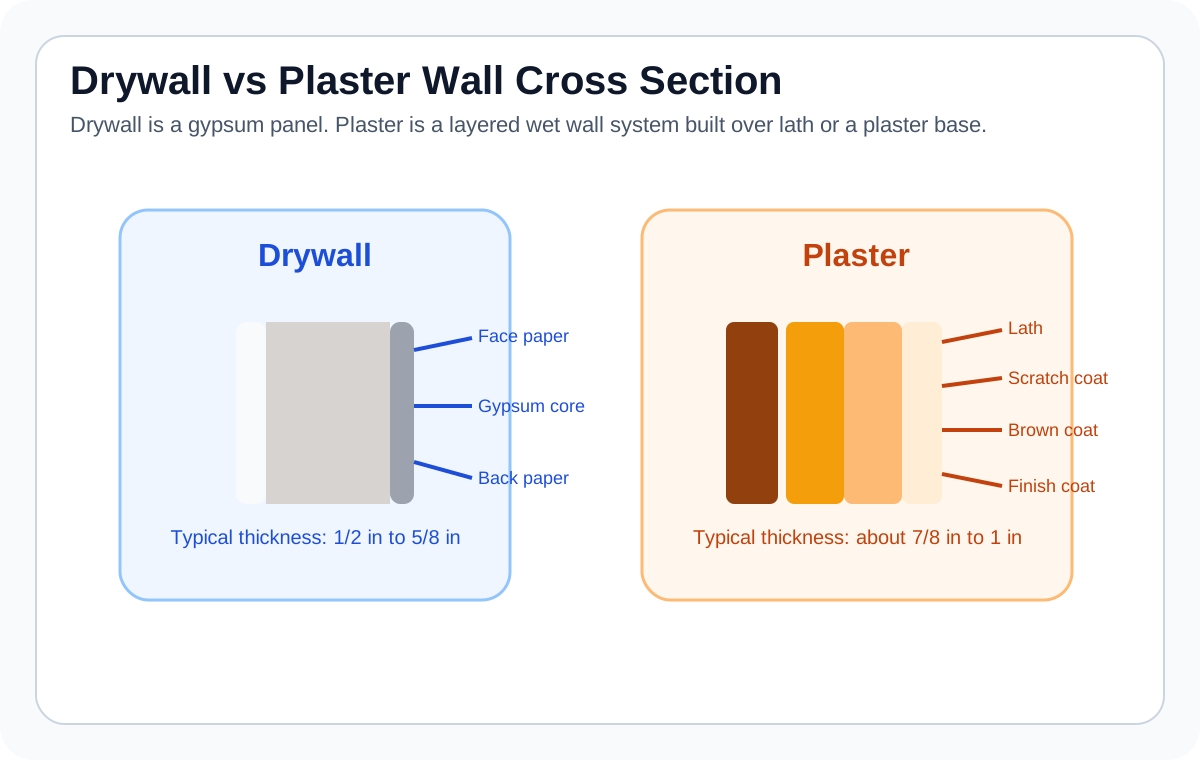
Plaster walls are built as a layered system rather than a single panel product. In many American homes built before the 1950s, that meant wood lath fastened across studs, followed by multiple coats of plaster that locked mechanically into the lath gaps. [1]
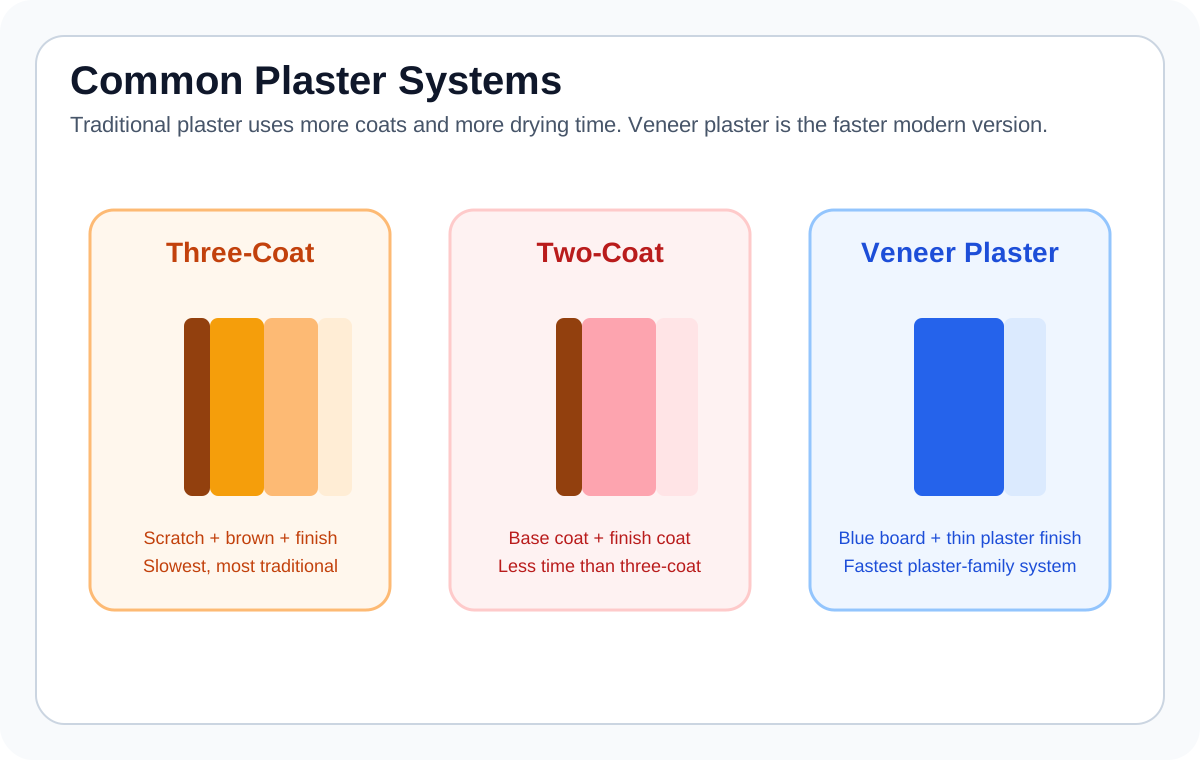
The result is a very hard, dense wall surface, but it takes skilled labor and significant drying time. Traditional plaster is a craft system more than a product system. Modern veneer plaster is faster because it uses blue board as a base, but it still depends on plaster skill to achieve the finish quality people expect. [1] [2]
Drywall - The Modern Panel System
Drywall became the dominant wall finish system because it is fast, predictable, and factory-made. A standard panel is a gypsum core faced with paper, cut to consistent sheet sizes, then fastened to framing and finished at the seams with tape and joint compound. [3] [4]
The big difference is workflow. Drywall is installed in sheets, which means it is easier to estimate, easier to schedule, and easier to replace in sections later. If you need a board-by-board breakdown of specialty sheet options, see Types of Drywall before you assume standard white board is the only drywall product that matters.
Part 2: Side-by-Side Comparison
Drywall vs. Plaster - 10-Category Comparison
The best way to compare drywall and plaster is category by category. One material rarely wins every category. Instead, the right choice depends on which category matters most to your project. [1] [2] [3] [4]
1. Cost
| Cost Metric | Drywall | Plaster |
|---|---|---|
| Materials per sq ft | $0.40 - $0.75 | $0.80 - $2.00 |
| Labor per sq ft | $1.10 - $2.85 | $3.00 - $8.00 |
| Total installed per sq ft | $1.50 - $3.50 | $2.00 - $10.00 |
| Typical 12 x 12 room | $693 - $1,617 | $924 - $4,620 |
| Typical 2,000 sq ft home | $10,200 - $23,800 | $13,600 - $68,000 |
Drywall wins this category by a large margin because the materials are cheaper and the labor is much faster to train, schedule, and scale. [1] [4]
2. Installation time
| Project | Drywall | Plaster |
|---|---|---|
| Single room | 1 to 2 days to hang, 3 to 5 days to finish | 1 to 2 weeks with drying time |
| Full house | About 3 to 5 weeks total | 4 to 8 weeks or more |
| Drying time between coats | About 24 hours | Several days per coat |
Drywall is dramatically faster from framing to paint-ready surface. Plaster demands more waiting and more finish control. [2] [3]
3. Durability and hardness
| Property | Drywall | Plaster |
|---|---|---|
| Surface hardness | Moderate | High |
| Impact resistance | Lower | Higher |
| Longevity | 30 to 70 years with maintenance | 75 to 100 plus years if sound |
Plaster wins here because a good plaster wall is harder, denser, and usually more resistant to everyday dents and scuffs. [2]
4. Sound performance
| Metric | Drywall, single layer | Plaster, three-coat |
|---|---|---|
| Approx. STC rating | 33 to 36 | 42 to 52 |
| Mass per sq ft | About 2.2 lb | About 8 to 12 lb |
| Speech transmission | Moderate | Lower |
Plaster has the advantage because it is much heavier. If sound is a priority, mass matters. [1] [2]
5. Repairability
| Scenario | Drywall | Plaster |
|---|---|---|
| Small hole repair | Easy | Moderate |
| Large repair | Moderate | Difficult |
| DIY-friendly | Yes | Limited |
| Contractor availability | Widely available | Skilled plasterers are less common |
Drywall wins because it is easier to patch, easier to learn, and much easier to find labor for. [3] [4]
6. Insulation and air sealing
Neither wall material is a real insulator on its own. The difference is that plaster can form a denser, more monolithic surface, which gives it a slight edge in air sealing when the assembly is intact. In a well-finished drywall installation, that gap is small. [1] [3]
7. Moisture resistance
Traditional lime plaster has better inherent moisture tolerance than standard paper-faced drywall, although modern moisture-resistant drywall types narrow that gap significantly. If you are comparing specialty drywall options, use Types of Drywall to match the board to the room first. [2] [4]
8. Fire resistance
Plaster and Type X drywall assemblies both perform well because gypsum contains chemically bound water. Standard drywall is weaker in this category, but plaster and rated drywall can perform similarly when installed as proper assemblies. [1] [2]
9. Aesthetic quality
Plaster usually wins for depth, hand-finished character, and historic authenticity. Drywall can get close with a high finish level, especially Level 5, but traditional plaster still carries a different surface quality in old or high-end rooms. [2] [3]
10. Environmental impact
Plaster has a slight edge on lifespan because it often lasts longer, but drywall has wider recycling channels and more predictable replacement paths. In real projects, longevity versus ease of repair is the trade. [3] [4]
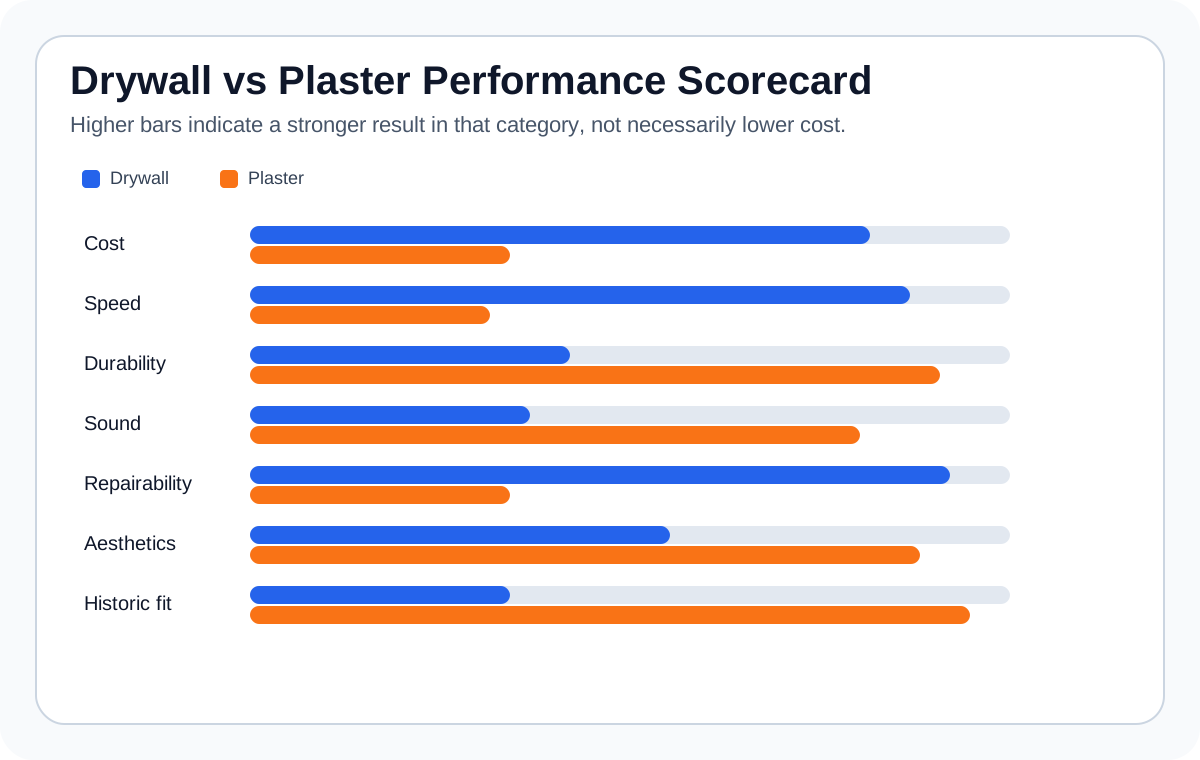
Summary scorecard
| Category | Winner | Margin |
|---|---|---|
| Cost | Drywall | Large |
| Installation speed | Drywall | Large |
| Durability and hardness | Plaster | Large |
| Sound performance | Plaster | Moderate |
| Repairability | Drywall | Large |
| Air sealing | Plaster | Small |
| Moisture resistance | Plaster | Moderate |
| Fire resistance | Tie | - |
| Aesthetic quality | Plaster | Moderate |
| Environmental impact | Plaster | Small |
Who Each Material Is Best For
If you strip away the nostalgia around plaster and the convenience of drywall, the choice usually comes down to what kind of project you are actually running. New construction, rental turnovers, basement finishing, and fast remodels almost always lean drywall because drywall is easier to price, easier to schedule, and easier to repair later. It is the better fit when consistency, speed, and cost control matter more than preserving a specific historic wall character.
- Choose drywall when you need the most practical solution for budget, schedule, and future repairs.
- Choose drywall when walls will be opened for wiring, insulation, plumbing, or layout changes anyway.
- Choose plaster when the house already has quality plaster and keeping original character has value.
- Choose plaster when you care more about hardness, sound control, and surface feel than fast installation.
Plaster makes more sense in older homes that still have strong original walls, in high-end rooms where finish quality matters, and in projects where the owner is prepared to pay for specialized labor. That does not mean plaster is always the luxury answer. In many homes, the smartest approach is selective: keep the best plaster walls, repair the ones that are stable, and use drywall only where demolition or major infrastructure work already makes replacement unavoidable.
Part 3: Full Cost Comparison - 2026
What You'll Actually Pay for Each
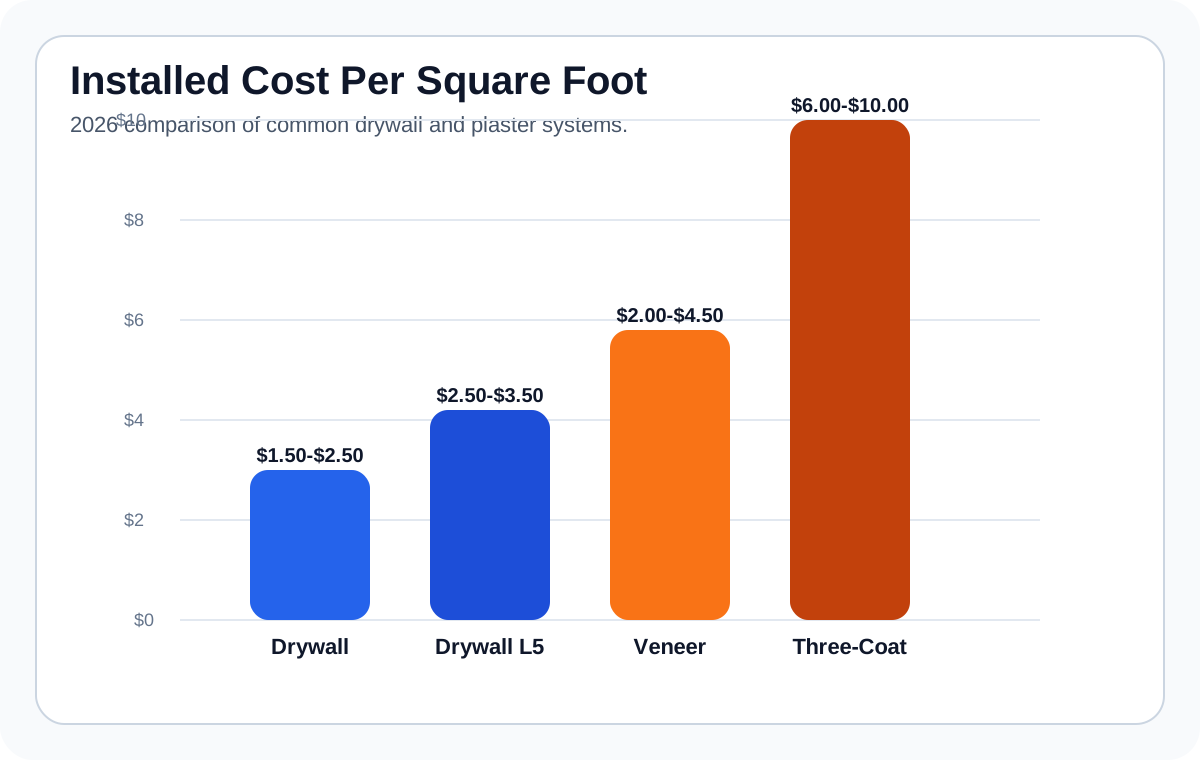
This is where the difference becomes most obvious in a budget. Drywall is almost always cheaper, but the degree of that difference depends on whether you are comparing standard drywall, Level 5 drywall, veneer plaster, or traditional three-coat plaster. [1] [4]
Plaster installation cost - 2026
| Plaster System | Cost Per Sq Ft | Notes |
|---|---|---|
| Veneer plaster | $2.00 - $4.50 | Fastest modern plaster system [1] |
| Two-coat plaster | $3.50 - $6.00 | Better quality, more time [2] |
| Three-coat lath and plaster | $6.00 - $10.00 | Traditional system, rare today [1] |
| Ornamental plaster | $10.00 - $25.00+ | Specialty work [2] |
Drywall installation cost - 2026
| Drywall System | Cost Per Sq Ft | Notes |
|---|---|---|
| Standard hang plus Level 3 | $1.50 - $2.50 | Most common residential [4] |
| Standard hang plus Level 4 | $2.00 - $3.00 | Flat paint or wallpaper prep [3] |
| Standard hang plus Level 5 | $2.50 - $3.50 | Closest drywall finish to plaster [4] |
| Double layer plus Level 5 | $3.50 - $5.00 | Maximum drywall performance |
If you want the drywall side of that comparison adjusted by location, finish level, and DIY versus pro install, run the numbers through the Drywall Cost Calculator and then compare them against the broader ranges in the Drywall Cost Guide 2026.
Part 4: How to Tell If Your Walls Are Plaster or Drywall
5 Ways to Identify Your Wall Material
Before you cut into a wall, patch a hole, or plan a remodel, confirm what the wall is made of. The safest approach is to combine more than one clue instead of relying on only the age of the house. [3] [4]
Test 1: The knock test. Drywall sounds more hollow and gives slightly. Plaster sounds denser and more solid. [3]
Test 2: The thickness test. Remove a switch plate and look at the edge. Drywall is usually 1/2 in or 5/8 in. Plaster is often closer to 3/4 in to 1 in and visibly layered. [4]
Test 3: The nail test. A small finish nail enters drywall much more easily than plaster, which often feels hard and brittle at the face. [3]
Test 4: The age test. Pre-1940 homes are commonly plaster. Post-1970 homes are commonly drywall. Mid-century homes can go either way. [4]
Test 5: The crack pattern test. Drywall often cracks along seams. Plaster often shows irregular map cracking or spider patterns. [3]
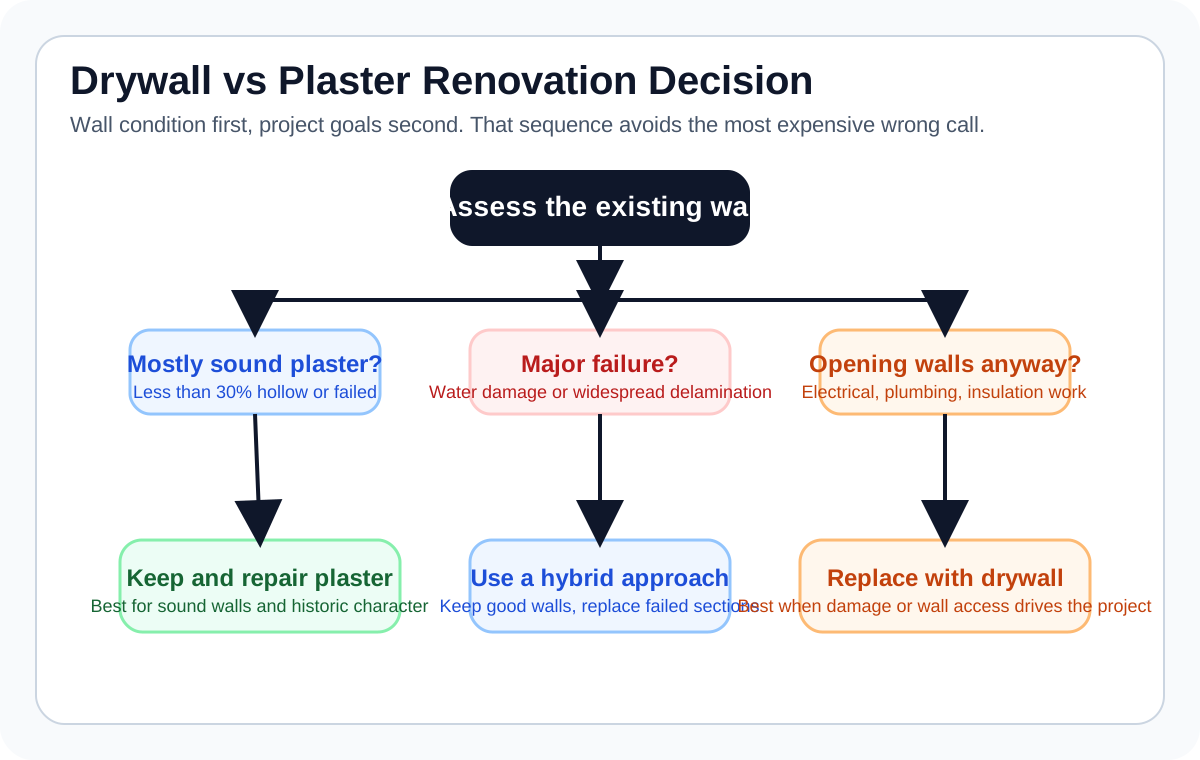
Part 5: Should You Keep Plaster or Replace With Drywall?
The Renovation Decision Framework
This is the question most renovation projects eventually reach. The right answer depends less on ideology and more on condition, project goals, and how much of the wall is already failing. [2] [4]
Keep plaster when
- The plaster is structurally sound and not delaminating
- The house is historic and surface authenticity matters
- Sound performance and old-house character are priorities
- The wall surface is still visually strong and only needs localized repair [2] [3]
Replace plaster with drywall when
- More than about 30% of the wall is hollow or detached
- There is significant water damage
- Walls need to open for electrical, plumbing, or insulation work
- The cracking is widespread and the substrate is not stable
- Schedule and budget matter more than preserving the original wall character [2] [4]
The hybrid approach
This is often the best compromise. It preserves what is worth saving and avoids throwing restoration money at walls that are already too far gone. [2]
It is also worth thinking about what replacement changes beyond the wall surface itself. Removing thick plaster can expose uneven framing, out-of-square corners, legacy trim details, and electrical boxes that sat flush only because the old wall was nearly an inch thick. Replacing plaster with 1/2-inch drywall is not always a direct swap. In older homes, contractors often use 5/8-inch drywall, shim the framing, or skim coat the finished surface so the new work does not look noticeably thinner and flatter than the adjacent original rooms.
That is why the cheapest-looking quote is not always the best plaster-replacement quote. If the scope ignores trim resets, box extensions, debris hauling, and finish matching, the number may be low only because important work is missing from it. On older-house projects, the decision is rarely just plaster versus drywall. It is plaster repair versus drywall replacement plus all the secondary adjustments that make the finished room look intentional.
Part 6: Plaster Repair vs. Drywall Repair
Which Is Easier to Fix?
Drywall repair is one of the clearest practical wins for drywall. The material is easy to cut, patch, and sand. Plaster repair is not impossible, but matching the mix, texture, and surrounding surface can become specialized work quickly. [2] [4]
Plaster repair costs - 2026
| Repair Type | DIY Cost | Professional Cost |
|---|---|---|
| Hairline cracks | $10 - $30 | $75 - $200 [1] |
| Small holes | $20 - $50 | $150 - $350 [1] |
| Large sections | $50 - $150 | $400 - $900 [2] |
| Delaminated sections | Difficult DIY | $8 - $15 per sq ft [1] |
Drywall repair costs - 2026
| Repair Type | DIY Cost | Professional Cost |
|---|---|---|
| Small hole | $10 - $25 | $75 - $150 [3] |
| Medium hole | $20 - $50 | $150 - $300 [3] |
| Large hole or panel section | $40 - $100 | $300 - $600 [4] |
| Water-damaged panel | $50 - $150 | $400 - $900 [3] |
The reason drywall repair usually wins is not only price. It is also labor availability. Skilled drywall patch work is easier to hire, easier to estimate, and much easier to do as a homeowner than high-quality plaster matching. [2] [4]
Part 7: The Veneer Plaster Middle Ground
Getting Plaster Quality at Closer-to-Drywall Cost
Veneer plaster is the middle ground between full traditional plaster and standard drywall. Blue board goes up like drywall, then receives a thin plaster finish coat. The result is harder and more plaster-like than ordinary drywall while avoiding the full time and cost of three-coat plaster. [1] [2]
Veneer plaster is worth considering in historic renovations, high-end rooms, and projects where the owner wants a plaster feel without paying for full traditional multi-coat work.
Part 8: Special Situations
Drywall Over Plaster - Is It Possible?
Yes. Installing 1/4 in or 3/8 in drywall over structurally sound plaster is often a practical way to avoid full demolition. It works best when the plaster is still well-bonded and the owner wants flatter walls without the cost of full replastering. [3] [4]
- The existing plaster must be sound, not hollow or detached
- Use screws long enough to reach framing through the plaster
- Expect some trim and electrical box adjustment because wall thickness changes
- Do not use this approach over wet or failing plaster [3] [4]
This approach is popular because it limits dust and demolition, but it is not invisible. Door casings, window stools, baseboard profiles, and built-in millwork can all look slightly recessed after an overlay. That trade can be acceptable in utility spaces, rentals, and simple remodels. In a formal older room with deep trim and detailed jamb extensions, it may look like a shortcut unless the finish carpenter also adjusts the surrounding trim details.
Soundproofing - Plaster vs. Drywall Options
| Option | Approx. STC | Cost Per Sq Ft | Notes |
|---|---|---|---|
| Existing three-coat plaster | 42 - 52 | Keep existing | Best value if already present |
| Standard 1/2 in drywall | 33 - 36 | $1.50 - $2.50 | Baseline |
| Double-layer drywall plus damping | 50 - 56 | $2.50 - $4.00 | Best drywall acoustic option [2] |
| QuietRock single layer | 45 - 56 | $3.50 - $5.50 | Premium drywall option |
| Veneer plaster over blue board | 44 - 50 | $2.00 - $4.50 | Plaster quality at moderate cost [1] |
Part 9: Quick-Reference Decision Guide
Drywall vs. Plaster - Which Is Right for Your Project?
Planning the Drywall Option?
Once the decision moves toward drywall, use the tools and guides below to size the job, price it, and plan the install sequence.
Open the Drywall Cost CalculatorReady to Start Your Project?
| Tool or Guide | What It Does |
|---|---|
| Drywall Calculator | Calculate the exact sheet count for the room if drywall is the path forward. [3] |
| Drywall Cost Calculator | Estimate total drywall project cost by size, finish level, and location. [1] |
| Types of Drywall Explained | Choose the right drywall type for bathrooms, garages, basements, ceilings, and specialty rooms. [4] |
| Drywall Cost Guide 2026 | See the full pricing breakdown for materials, labor, finish levels, and region. [1] |
| How to Hang Drywall | Follow the step-by-step installation sequence if you are doing the work yourself. [3] |
Editorial note: the [1]-[4] markers in this guide refer to the cost, durability, fire, sound, and installation assumptions used across this site's drywall tools and editorial references.