- The exact formula for calculating drywall sheets by room
- How to account for doors, windows, ceilings, and waste
- How sheet size affects seam count and total sheets
- A room-by-room drywall reference chart for common sizes
- The mistake that causes most homeowners to order the wrong amount
Skip the Manual Math
Use our free Drywall Calculator to enter room dimensions, openings, waste, and sheet size in one step.
Open the calculator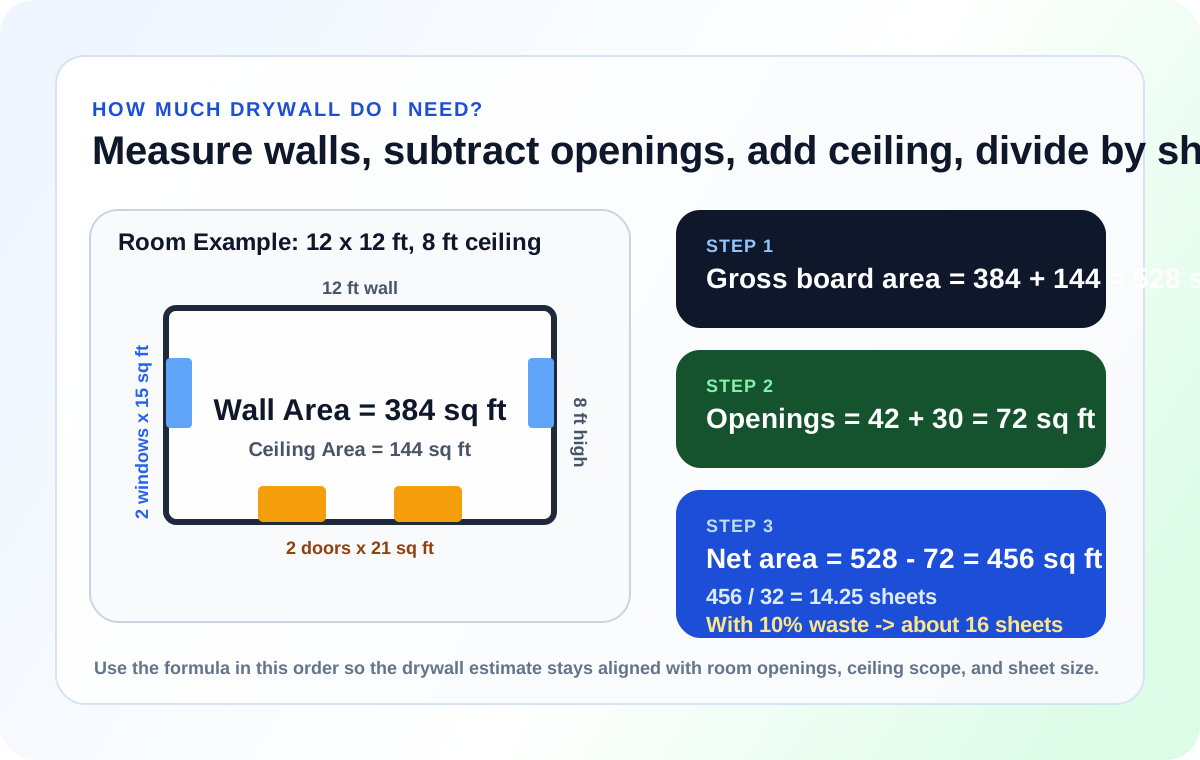
A standard 12 x 12 room with 8 ft ceilings usually needs about 11 sheets of 4 x 8 drywall for walls only, or about 16 sheets for walls plus ceiling when you include two doors, two typical windows, and 10% waste.
Part 1: The Basic Formula
How to Calculate Drywall - Step by Step
Calculating drywall comes down to one core formula:
Total Sheets = (Total Wall Area + Ceiling Area - Openings) / Sheet Coverage Area
Here is how to work through it in the order that keeps the estimate accurate. [3]
Step 1: Calculate your wall area. For each wall, multiply length x height. In a simple rectangular room, wall area is usually perimeter times wall height.
Step 2: Subtract doors and windows. Major openings reduce net drywall area. The site calculator uses a conservative planning deduction of 21 sq ft for a standard door and 15 sq ft for a typical window so the article stays aligned with the tool. [3]
| Opening Type | Typical Size | Area to Subtract |
|---|---|---|
| Standard door | 3 ft x 7 ft | 21 sq ft |
| Typical window | Planning allowance | 15 sq ft |
| Large window | 4 ft x 5 ft | 20 sq ft |
| Sliding door | 6 ft x 7 ft | 42 sq ft |
Pro tip: Many installers skip small opening deductions on tiny rooms and let those offcuts absorb some of the waste factor. On bigger rooms, subtracting major openings gives you a cleaner sheet count. [3]
Step 3: Add ceiling area if the ceiling is in scope. Ceiling area is room length times room width.
Step 4: Divide by sheet coverage area. Standard drywall sheet sizes cover the following square footage. [1] [2]
| Sheet Size | Coverage Area |
|---|---|
| 4 x 8 ft | 32 sq ft |
| 4 x 9 ft | 36 sq ft |
| 4 x 10 ft | 40 sq ft |
| 4 x 12 ft | 48 sq ft |
Step 5: Add waste factor. Waste covers bad cuts, damaged corners, awkward corners, and the reality that rooms are rarely perfect rectangles once you start hanging board. [3]
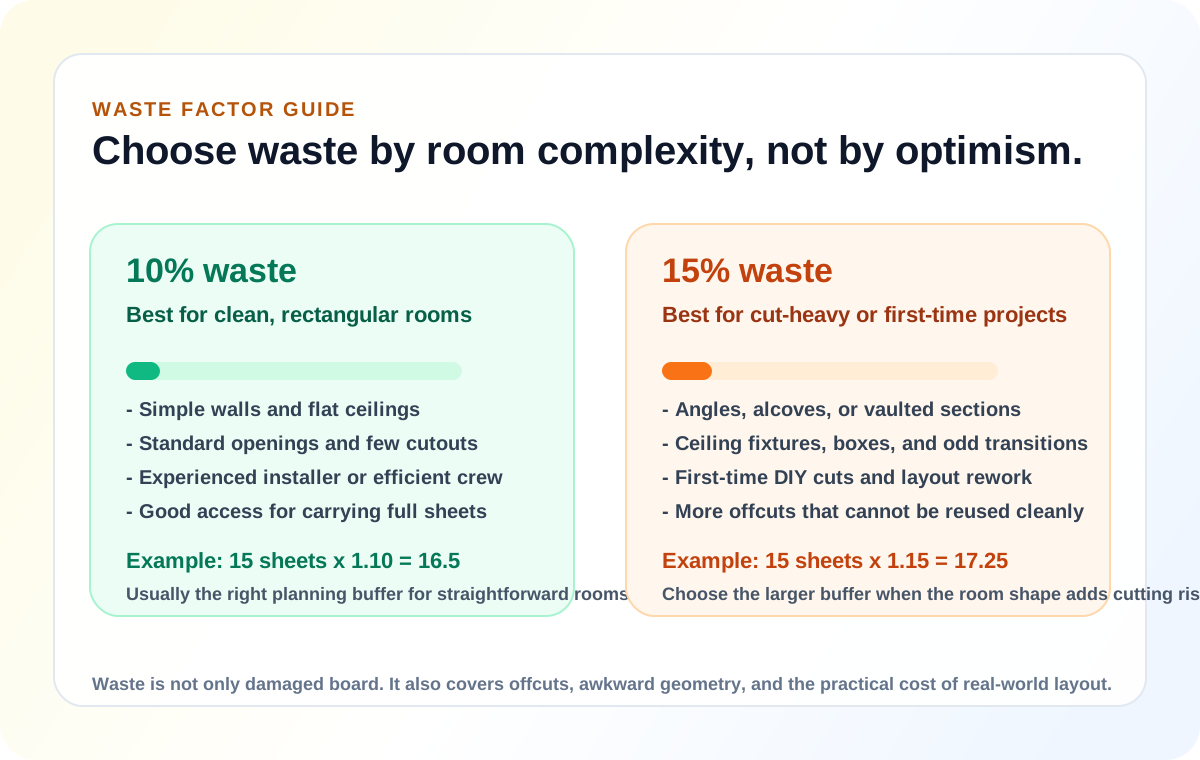
Use 10% waste on simple rectangular rooms with standard ceiling height and an experienced installer. Use 15% waste on rooms with angles, ceiling cutouts, vaulted sections, or first-time DIY work. [3]
Part 2: Room-by-Room Reference Chart
How Many Sheets of Drywall Do I Need?
Use this quick chart for common room sizes. These examples assume 8 ft ceilings, 4 x 8 sheets, two doors + two typical windows, and a 10% waste factor. That keeps the chart aligned with the planning assumptions in the site calculator. [1] [2]
Walls Only (No Ceiling)
| Room Size | Wall Area | Net Area | Sheets Needed |
|---|---|---|---|
| 8 x 8 ft | 256 sq ft | 184 sq ft | 7 sheets |
| 10 x 10 ft | 320 sq ft | 248 sq ft | 9 sheets |
| 12 x 12 ft | 384 sq ft | 312 sq ft | 11 sheets |
| 12 x 14 ft | 416 sq ft | 344 sq ft | 12 sheets |
| 14 x 14 ft | 448 sq ft | 376 sq ft | 13 sheets |
| 16 x 16 ft | 512 sq ft | 440 sq ft | 16 sheets |
| 20 x 20 ft | 640 sq ft | 568 sq ft | 20 sheets |
Walls + Ceiling
| Room Size | Gross Area | Net Area | Sheets Needed |
|---|---|---|---|
| 10 x 10 ft | 420 sq ft | 348 sq ft | 12 sheets |
| 12 x 12 ft | 528 sq ft | 456 sq ft | 16 sheets |
| 12 x 14 ft | 584 sq ft | 512 sq ft | 18 sheets |
| 14 x 14 ft | 644 sq ft | 572 sq ft | 20 sheets |
| 16 x 16 ft | 768 sq ft | 696 sq ft | 24 sheets |
| 20 x 20 ft | 1,040 sq ft | 968 sq ft | 34 sheets |
Need the Exact Number for Your Room?
Use our free Drywall Calculator to enter your actual room dimensions, sheet size, ceiling scope, and openings.
Get my sheet countPart 3: How Sheet Size Affects Your Count
4x8 vs 4x10 vs 4x12 - Which Should You Buy?
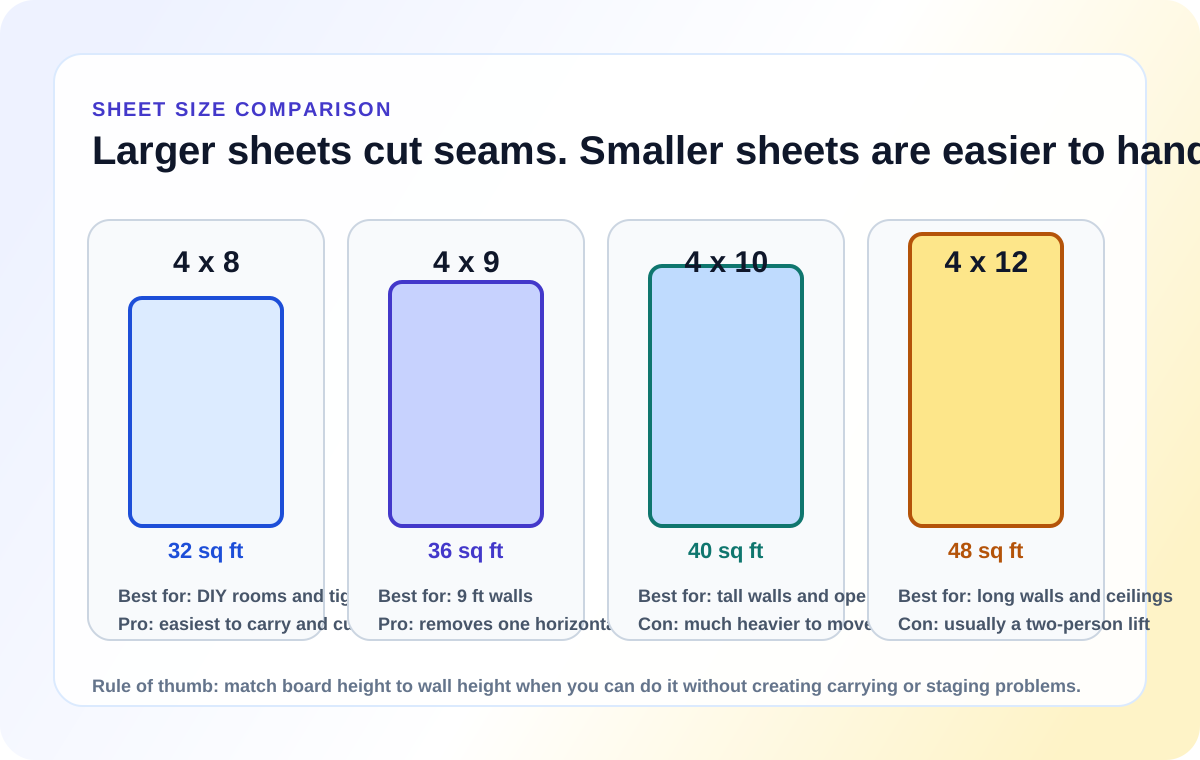
Most homeowners default to 4 x 8 sheets because they are the easiest to carry, stage, and cut. That makes sense for bedrooms, hallways, patch jobs, and rooms with awkward access. But larger sheets can reduce seams and lower finishing labor when the room geometry supports them. [2] [4]
| Sheet Size | Best For | Pros | Cons |
|---|---|---|---|
| 4 x 8 ft | Most rooms, DIY, tight access | Easiest to handle, widely stocked | More seams on taller walls |
| 4 x 9 ft | 9 ft ceilings | Fewer seams, cleaner finish path | Harder to transport and stage |
| 4 x 10 ft | 10 ft walls and long open runs | Can cover full wall height | Heavier and slower to move |
| 4 x 12 ft | Big open walls and ceilings | Fewest seams, faster production | Very heavy, often needs two people |
The Seam Problem with 4x8 on Tall Walls
On a 9 ft wall, a 4 x 8 sheet leaves a 1 ft strip that has to be filled, taped, mudded, and sanded. That means more labor, more compound, and more chances for a visible seam under paint. A 4 x 9 sheet on the same wall can eliminate that extra horizontal seam entirely. [2]
That is the rule of thumb worth remembering: match sheet height to ceiling height whenever possible. The order may cost a little more per sheet, but the total installation can still be cleaner and faster because there are fewer joints to finish. [4]
Part 4: Drywall Thickness - Which Do You Need?
Choosing the Right Thickness for Each Application
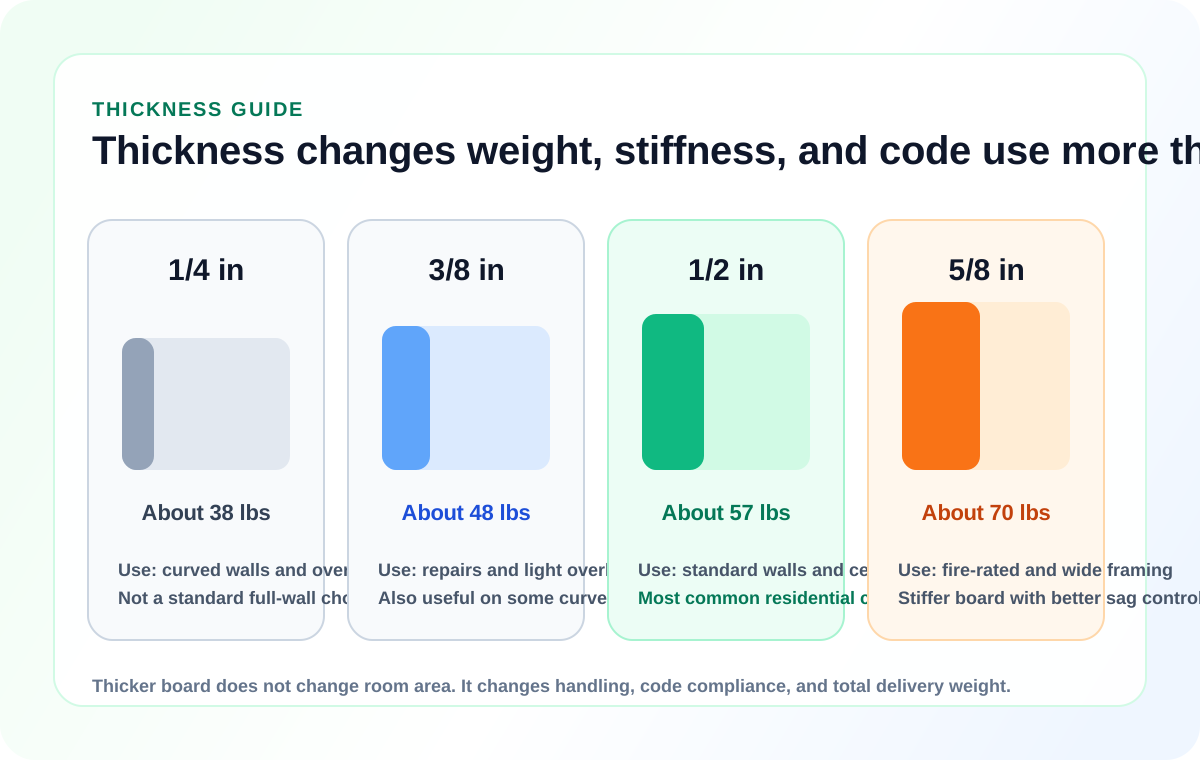
Thickness does not change the square footage you need, but it changes how heavy the order becomes, how stiff the panel feels on ceilings, and what code or performance requirements the wall can satisfy. [1] [3]
| Thickness | Approx. Weight per 4 x 8 Sheet | Best Application |
|---|---|---|
| 1/4 in | About 38 lbs | Curved walls and overlay work |
| 3/8 in | About 48 lbs | Repairs, overlays, curved applications |
| 1/2 in | About 57 lbs | Standard interior walls and ceilings |
| 5/8 in | About 70 lbs | Fire-rated walls, wider framing, commercial work |
When to Use 5/8" Instead of 1/2"
Use 5/8 in drywall when the assembly needs more stiffness or code performance than standard 1/2 in board delivers. That usually means garage separation walls, shared walls, ceilings framed wider than 16 in on center, and commercial assemblies where sag resistance or fire resistance matters more than easy handling. [1]
- Garage-to-house or other fire-rated wall assemblies
- Ceilings framed at 24 in on center where sag resistance matters
- Commercial jobs with code-driven board requirements
- Walls where sound control or stiffness is part of the scope
Concerned about delivery weight or floor loading? Use the Drywall Weight Calculator before ordering. A room full of 5/8 in board can weigh hundreds of pounds more than the same room in 1/2 in drywall. [1]
Part 5: Special Situations
Calculating Drywall for Ceilings
Ceiling drywall uses the same basic formula as walls, but ceilings deserve more caution. Overhead cuts are harder, offcuts are less reusable, and long panels are often more valuable because they reduce seams in the hardest place to finish. [4]
- Use 5/8 in drywall on ceilings with 24 in joist spacing when sag resistance matters. [1]
- Use a bigger waste allowance on ceiling-heavy projects. A flat simple room might still fit 10%, but ceiling-only work often pushes closer to 15%. [3]
- Plan orientation before ordering. Running sheets perpendicular to joists is usually the better structural choice, but it can affect how many full sheets fit the room. [4]
Calculating Drywall for an Entire House
For whole-house work, calculate each room separately, then add the room totals together. That gives you a better order than using only house floor area because bedrooms, hallways, closets, stairwells, garages, and utility rooms do not share the same opening count or ceiling shape. [1] [2]
| House Size | Estimated Drywall Area | Approx. 4 x 8 Sheets |
|---|---|---|
| 1,000 sq ft home | About 3,500 sq ft drywall | About 120 sheets |
| 1,500 sq ft home | About 5,200 sq ft drywall | About 180 sheets |
| 2,000 sq ft home | About 6,800 sq ft drywall | About 235 sheets |
| 2,500 sq ft home | About 8,500 sq ft drywall | About 295 sheets |
Why does drywall area often run three to four times floor area? Because you are covering all the walls in every room, then possibly all the ceilings as well. That multiplies surface area much faster than floor area alone suggests. [2]
Calculating Drywall for Odd-Shaped Rooms
For L-shaped rooms, alcoves, tray ceilings, or vaulted spaces, break the room into smaller rectangles and calculate each piece separately. That keeps the math simple while still reflecting the real shape. [4]
For vaulted ceilings, measure the actual slope length instead of using the flat floor area. The floor may say one number, but the sloped board area is usually larger. [4]
Part 6: Don't Forget the Accessories
What Else Do You Need Besides Drywall Sheets?
Drywall sheets are only the visible part of the order. A complete project also needs joint compound, tape, screws, and corner bead. If you stop at sheet count, you are only halfway through the material list. [2] [3]
Joint compound (mud). A practical planning rule is that a typical room with roughly 400 sq ft of wall area often needs 2 to 3 five-gallon buckets for tape-and-finish work, depending on finish level. A whole-house job can easily move into 8 to 12 buckets. [2] [3]
Paper tape. One 500 ft roll covers about 500 linear ft of joints. A simple planning shortcut is to estimate about 1 linear ft of joint per square foot of drywall, then adjust for sheet strategy and ceiling work. [3]
Drywall screws. A 4 x 8 sheet on walls often uses about 32 screws. The same sheet on ceilings often needs closer to 40 screws because fastening schedules tighten overhead. A good store-run shortcut is one 5 lb box for every 20 sheets. [2]
Corner bead. Measure every outside corner in linear feet. One 8 ft stick of corner bead usually covers one standard outside corner. [3]
Part 7: The Most Common Drywall Calculation Mistakes
5 Mistakes That Cause You to Buy the Wrong Amount
Mistake #1: Forgetting the ceiling. This is the most common miss. A room that looks fully estimated on paper can still be several sheets short if the ceiling is quietly assumed but never counted. [3]
Mistake #2: Not accounting for waste. Even clean rooms need some allowance. Angled rooms, cut-heavy rooms, and first-time DIY jobs need more. [3]
Mistake #3: Using only gross wall area. Doors and windows may not eliminate every offcut, but ignoring major openings can still push the order too high. [1]
Mistake #4: Ignoring sheet size options. Defaulting to 4 x 8 on every room often creates avoidable seams on 9 ft and 10 ft walls. [2] [4]
Mistake #5: Not checking order weight before delivery. A large stack of 5/8 in board can overload a small trailer or concentrate too much weight in one storage spot. [1]
The goal is not only to get the math right. The goal is to get the order right for the room, the sheet strategy, the crew, and the delivery plan.
Part 8: Quick-Reference Summary
The Complete Drywall Calculation Checklist
- Measured all wall lengths and wall heights
- Added ceiling area if the ceiling is in scope
- Subtracted major door openings
- Subtracted major window openings
- Divided net area by the right sheet coverage number
- Rounded up to whole sheets
- Added a realistic 10% to 15% waste factor
- Chose the right board thickness for the application
- Matched sheet size to ceiling height when possible
- Added mud, tape, screws, and corner bead
- Checked delivery and stacking weight if the order is large
The Formula - One More Time
Sheets = ((Wall Area + Ceiling Area - Openings) / Sheet Coverage) x (1 + Waste %)
Always round up to the next full sheet after the waste factor is applied.This guide uses the cleaner planning method: calculate on net area, apply waste, then round up once at the end. That keeps the examples, room chart, and calculator answers aligned. If you want extra cushion for a difficult room, increase the waste factor instead of double-rounding the sheet count. [1] [3]
Skip the Math
If measuring and dividing is not how you want to spend the next ten minutes, use our free Drywall Calculator and let the tool handle the sheet count for you.
Calculate My Drywall Now - FreeRelated Tools You'll Need
| Tool | What It Does |
|---|---|
| Drywall Weight Calculator | Check transport load, delivery weight, and floor stacking pressure before ordering. [1] |
| Drywall Cost Calculator | Estimate material, labor, and finish cost once the sheet count is known. [2] |
| Stud Spacing Calculator | Plan framing quantities before you hang the board. |
| Paint Calculator | Estimate primer and finish paint after the drywall phase is complete. |
Planning note: the [1]-[4] markers in this guide refer to the sizing, sheet coverage, waste, weight, and installation assumptions used across this site's drywall tools and editorial reference material.