The good news is that drywall installation is not mysterious. It is mostly about preparation, layout, safe handling, and a few rules that professionals follow on every job. Before you start, use our free Drywall Calculator to confirm sheet count, waste allowance, and room coverage so the job does not stall halfway through.
- Every tool and material you need before the first panel goes up
- The exact sequence for ceilings, top wall rows, and bottom rows
- How to cut cleanly around outlets, doors, and windows
- The most common beginner mistakes and how to avoid them
- Field-tested hanging drywall tips that save time during finishing
Start With the Sheet Count
Confirm sheet count and waste before you move the first panel into the room.
Open the free Drywall Calculator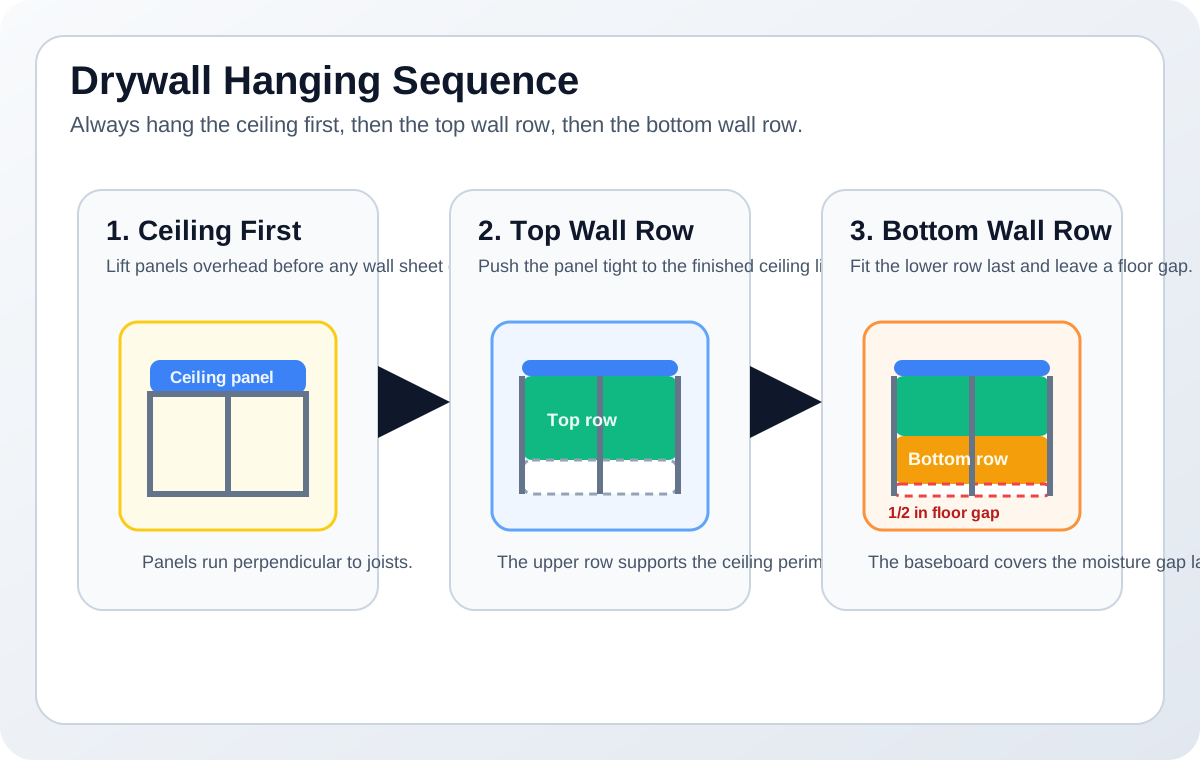
Part 1: Tools & Materials Checklist
Everything You Need Before You Start
Drywall goes faster when measuring, cutting, lifting, and fastening tools are staged before the first sheet moves. A missing square, dead drill battery, or forgotten lift wastes more time than most beginners expect. [3]
Confirm sheet size, thickness, framing type, and whether ceilings are included before the order arrives. Standard 1/2 in board handles most interior walls, while 5/8 in is often the better call for wider joist spacing, fire-rated work, and some ceilings. You also need screws matched to wood or metal framing, corner bead for outside corners, and adhesive if you plan to glue and screw. [1] [3]
Lock the quantity plan before the first stack comes off the truck. Running short halfway through the room usually forces awkward seam changes later. [3]
Part 2: Preparation - The Step Most DIYers Skip
Why Prep Work Determines Your Final Result
Good prep eliminates crooked seams, unsupported edges, and missed screws. Drywall exposes every weakness in the framing, so the prep stage usually decides whether the install feels smooth or messy. [4]
Step 1: Inspect and Prepare the Framing
Walk the full room before you lift a sheet. Look for bowed studs, missing backing, and anything else that will print through the panel face later. A stud that sits even 1/4 in proud of the rest can leave a visible hump after finishing. [1]
- Bowed or twisted studs: shim, plane, or sister them.
- Missing blocking: add backing anywhere an edge would fall between framing members.
- Protruding fasteners: hammer down or remove them so sheets sit flat.
- Incomplete rough-ins: finish plumbing and electrical before the wall closes. [2]
Once the framing is corrected, mark the center of every stud and joist on the floor plate and ceiling plate. Those marks become your roadmap after the board covers the framing. If you also need to confirm room takeoff before you stage the sheets, run the numbers through the free Drywall Calculator. [1]
Step 2: Mark Stud Centers on Floor and Ceiling
This is the step most beginners skip. Once a panel covers the wall, every screw line becomes guesswork unless the studs were marked first. [2]
With those reference points in place, you can lift a full panel and drive screws accurately without hunting for framing behind the paper face. If you still need to confirm wall layout or spacing, use the Stud Spacing Calculator before hanging. [2]
Lock In Layout Before You Lift
Verify framing rhythm so every edge lands where it should.
Open the Stud Spacing CalculatorStep 3: Plan Your Panel Layout
Sketch a quick layout for each wall before hanging. You want to know where full sheets go, where cuts are unavoidable, and where butt joints will land. That alone prevents many bad seam decisions. [3]
| Orientation | Best For | Why It Works |
|---|---|---|
| Horizontal | Most residential walls, especially 8 ft and taller | Fewer seams, better use of tapered edges, easier butt-joint staggering [1] |
| Vertical | Simple walls under 8 ft or specific commercial layouts | Can reduce cuts on short walls, but creates more seam exposure on tall walls |
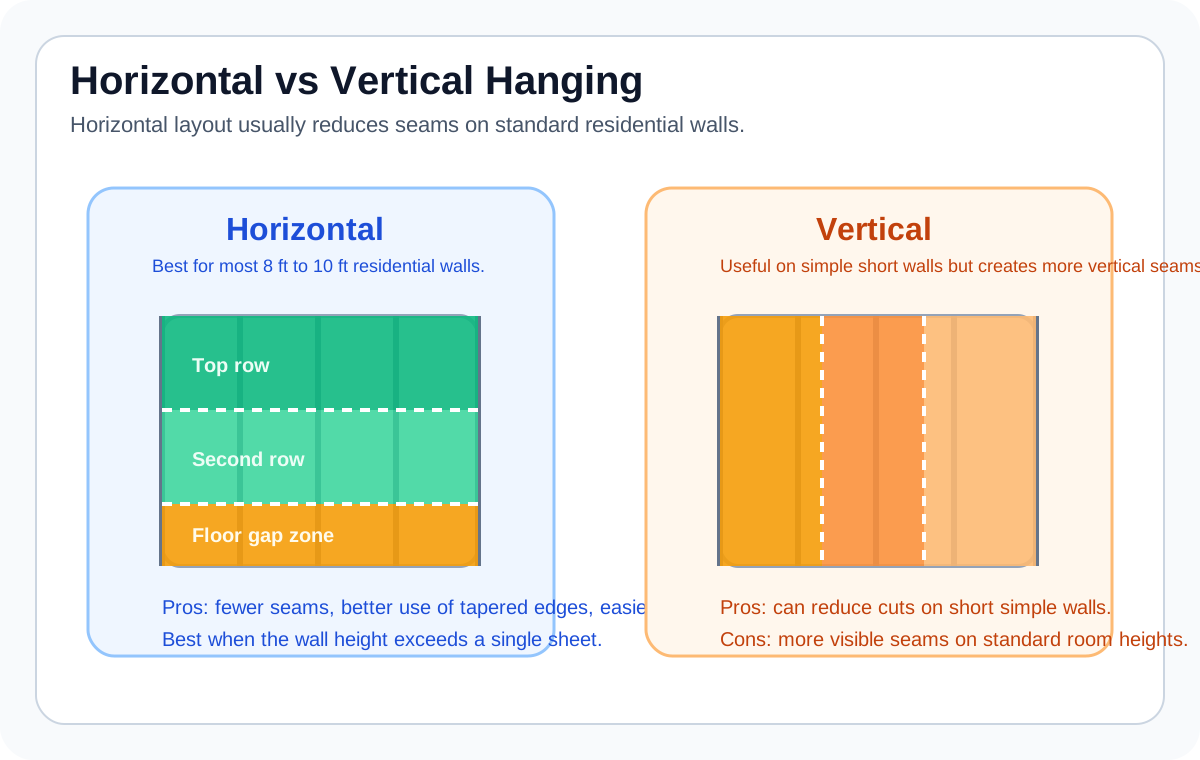
Match sheet strategy to the room instead of defaulting to whatever size is easiest to buy. On walls taller than 8 ft, horizontal hanging usually keeps seams easier to finish. [1] [4]
Step 4: Store Sheets Correctly
Drywall is easy to damage before installation. Store sheets flat, keep them dry, and avoid stacking so high that the bottom sheets become difficult to remove safely. If the space is cold or damp, let the board acclimate inside the room before hanging. [4]
- Store sheets flat, not leaning for days.
- Keep all board dry and out of standing moisture.
- Do not stack more weight in one spot than the floor can carry.
- Let sheets acclimate when temperature swings have been extreme. [4]
Part 3: Hanging the Ceiling First
Always Start With the Ceiling
Always hang drywall on the ceiling first, then the walls. The wall sheets installed second help support the ceiling edges and reduce cracking at the wall-ceiling joint. [1] [2]
This sequence keeps wall panels from carrying ceiling weight at the perimeter. Ceiling first is not a preference. It is the order that gives the install the best chance to stay tight. [1]
Step 5: Hang Ceiling Panels
Ceiling drywall is the most physically demanding part of the job. Holding a full sheet overhead while trying to start screws is how corners get crushed and shoulders get hurt. A drywall lift is the right answer on almost every ceiling job. [2] [3]
If a lift is not available, a deadman brace can support one side of the sheet while you fasten the other, but it is still slower and less controlled. [3]
Step 6: Handle Ceiling Seams
Run ceiling panels perpendicular to joists whenever possible. That orientation spreads the load better, uses the framing more effectively, and usually gives you fewer obvious seams. Just as important, stagger all end joints. A long row of aligned butt joints creates a continuous weak line that loves to crack. [1] [4]
Ceiling work also needs realistic waste planning because offcuts are harder to reuse overhead and cutouts eat more material than people expect. [4]
Part 4: Hanging the Walls
Step 7: Start With the Top Row
Once the ceiling is complete, begin wall panels at the top. Hanging top-down keeps the upper joint tight to the ceiling and lets the lower row absorb any floor irregularities. Any gap left at the floor will be hidden by baseboard, but a gap at the ceiling stays visible forever. [1] [2]
A simple foot lifter makes this stage much easier by pushing the sheet upward while you start screws. [2]
Step 8: Apply Drywall Adhesive
Adhesive is optional, but useful. Applied correctly, it reduces field screws, helps panels sit tight to framing, and can reduce future screw pops as lumber dries and shifts. [4]
Adhesive does not replace correct edge fastening. Think of it as a stiffness upgrade, not a shortcut. [4]
Step 9: Fasten Correctly - Screw Depth Is Everything
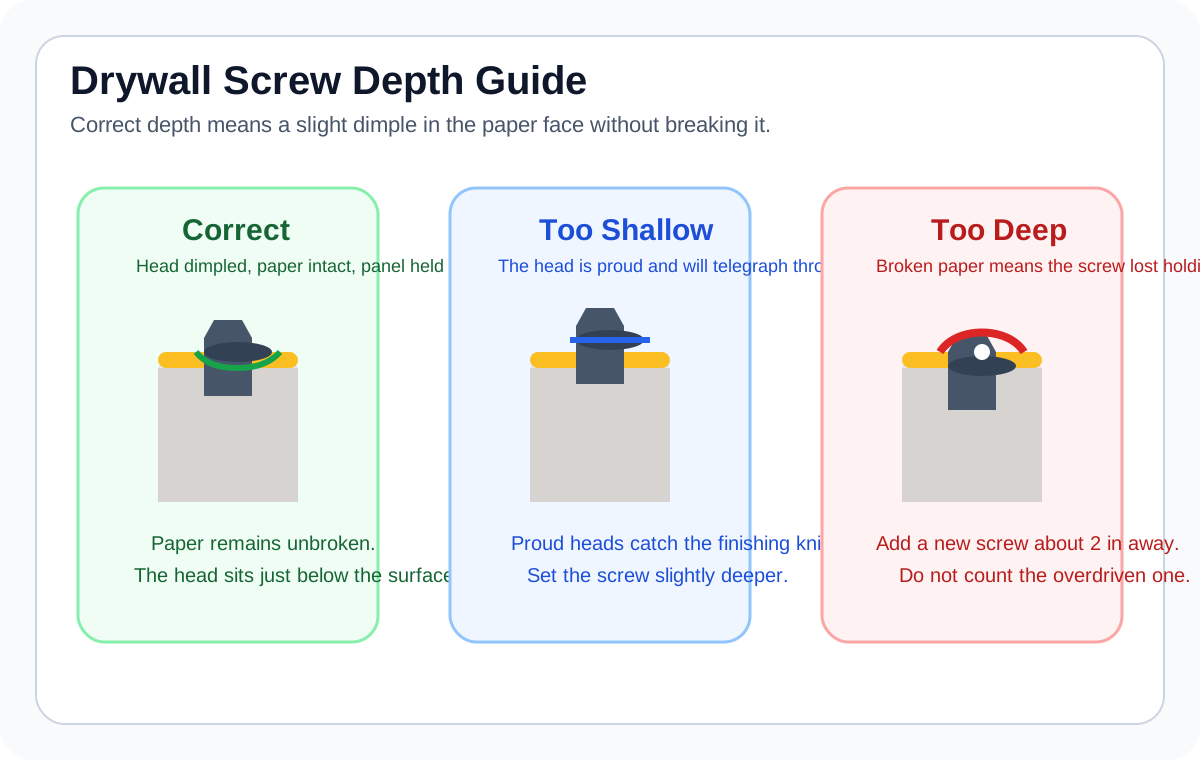
The screw head should sit slightly below the face paper so it creates a clean dimple, but the paper must stay intact. If the screw breaks the paper, it needs a new screw nearby. [4]
| Location | Recommended Screw Spacing |
|---|---|
| Wall panel edges | Every 8 in into studs |
| Wall panel field | Every 16 in into studs |
| Ceiling panels | Every 8 in into each joist |
| Field with adhesive | Up to every 24 in when manufacturer guidance allows |
Check Budget Before Finishing Starts
Once sheet count and fastening strategy are set, price the full install so you know what DIY savings actually look like.
Open the Drywall Cost CalculatorStep 10: Hang the Bottom Row
After the top row is finished, measure the remaining gap to the floor and cut the bottom row to fit. Leave about 1/2 in at the floor so the panel does not wick moisture. Baseboard covers the gap later. [1]
Part 5: Cutting Drywall
Step 11: How to Score and Snap
The score-and-snap method is still the fastest way to make a straight drywall cut. You need one clean score through the face paper, a controlled snap, and a quick cut through the back paper. [3]
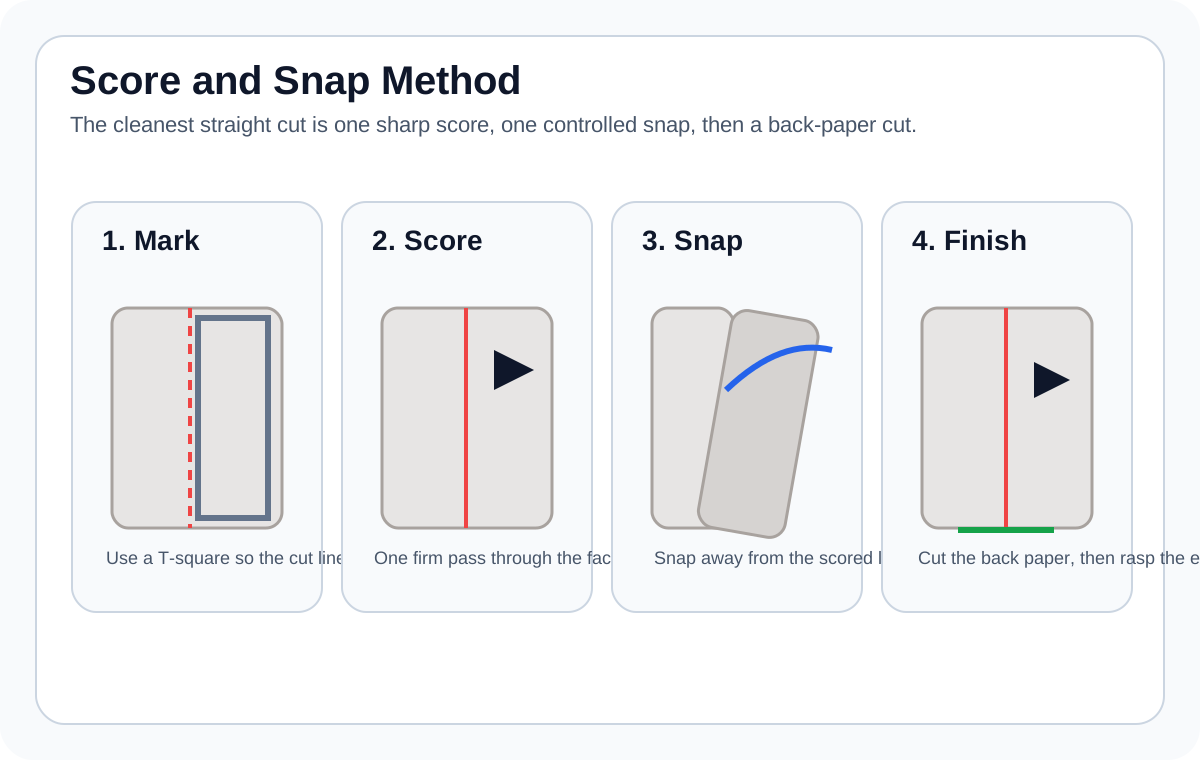
Change blades frequently. Dull blades tear drywall paper instead of scoring it cleanly. [3]
Step 12: Cutting Outlet and Switch Openings
Electrical box openings are where accurate measurement matters most. You can use a rotary cut-out tool, direct measurement, or chalk transfer depending on the room and your workflow. [2] [3]
Regardless of method, cut the opening slightly undersize on the first pass. Enlarging a hole takes seconds. Repairing a hole that is too large takes much longer and usually leaves an ugly cover plate gap. [2]
Step 13: Cutting Around Doors and Windows
Around door and window openings, the most reliable method is usually to hang the full sheet over the opening and cut it out after fastening. That keeps seams away from weak corners. [1]
Avoid placing a seam exactly at the corner of a door or window. A larger uninterrupted panel is stronger and usually easier to finish. [1] [4]
Part 6: Inside and Outside Corners
Step 14: Inside Corners
Inside corners do not need bead, but they do need consistent sequencing. Run the first wall panel into the corner, then bring the second wall panel to it so the finisher gets a predictable inside angle. [2]
Step 15: Outside Corners
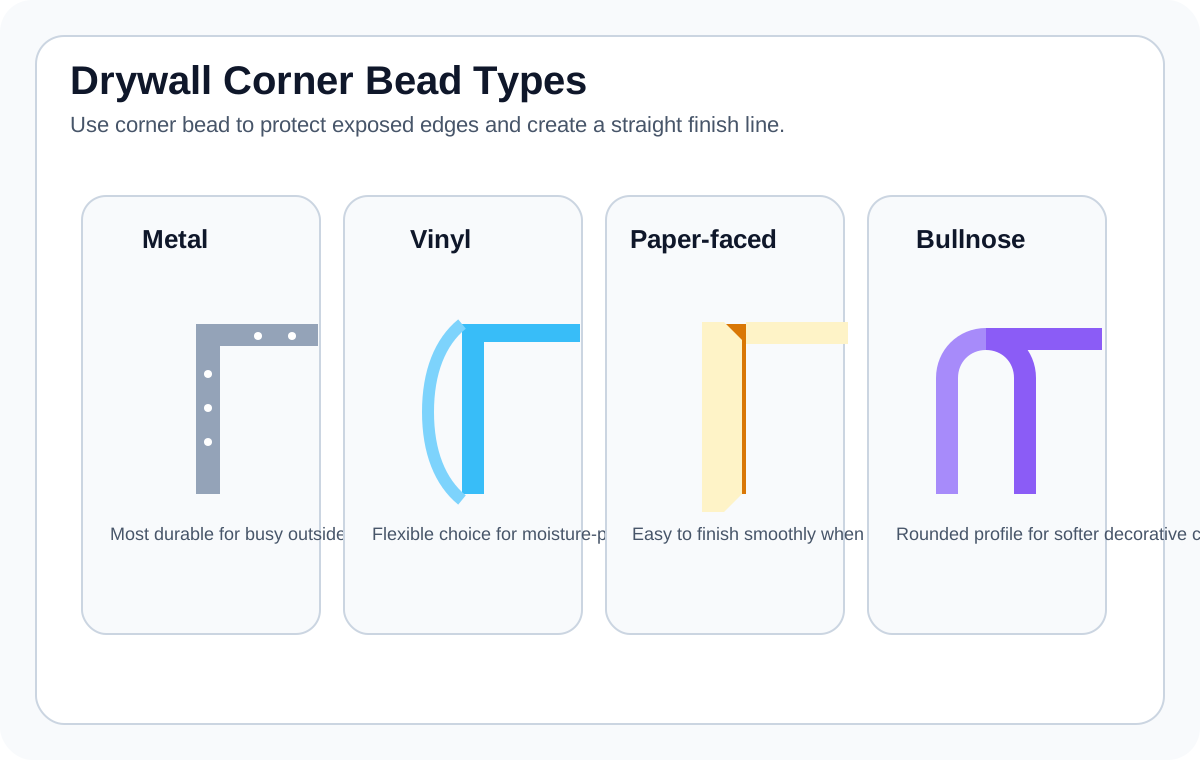
Outside corners need corner bead because raw drywall edges are too fragile to survive normal traffic. Install bead after both sides of the corner are boarded and checked for straightness. [1] [3]
| Corner Bead Type | Best For | Notes |
|---|---|---|
| Metal angle bead | Standard outside corners | Durable and common, but needs careful fastening |
| Vinyl bead | Curves and moisture-sensitive areas | Flexible and easy to trim |
| Paper-faced bead | Smooth finish work | Finishes easily when embedded well |
| Bullnose bead | Rounded decorative corners | Softens the finished corner profile |
Part 7: Pro Tips That Save Hours
15 Tips From Experienced Drywall Installers
- Hang ceilings first, then walls. [1]
- Mark every stud and joist center before hanging so screw lines stay accurate. [2]
- Stagger butt joints by at least 4 ft to avoid long crack lines. [1]
- Use full sheets whenever the room allows because fewer seams mean less finishing work. [4]
- Change utility knife blades often. Sharp blades create cleaner paper edges. [3]
- Cut outlet openings slightly undersize on the first pass. [2]
- Use the hang-and-cut method on doors and windows. [1]
- Drive screws dimpled, not buried. [4]
- Keep screws about 3/8 in from panel edges so the gypsum does not crumble. [1]
- Use adhesive when framing movement is expected. [4]
- Store sheets flat and dry. [4]
- Use a drywall lift on ceilings whenever possible. [2]
- Use a foot lifter on wall rows to keep panels tight without fighting gravity. [2]
- Leave a small seam gap where the manufacturer recommends it instead of crushing sheets together. [3]
- Always leave about 1/2 in at the floor so the board stays clear of moisture. [1]
Part 8: Common Mistakes to Avoid
The 7 Most Expensive Drywall Hanging Mistakes
Mistake #1: Hanging walls before the ceiling. This reverses the support order and makes cracking at the ceiling line more likely. [1]
Mistake #2: Letting panel edges land off framing. Unsupported edges flex, crack, and never feel solid. [2]
Mistake #3: Aligning butt joints in adjacent rows. Long butt-joint lines are weak and difficult to finish. [1]
Mistake #4: Driving screws too deep. Once the paper breaks, that fastener needs a replacement nearby. [4]
Mistake #5: Skipping the floor gap. Panels that touch the floor absorb moisture and deteriorate at the bottom edge. [1]
Mistake #6: Failing to mark studs before hanging. Missed screws and wandering fastener lines are the predictable result. [2]
Mistake #7: Using the wrong screw or board size for the job. Many problems are really order-stage mistakes. [3]
Most drywall mistakes are not dramatic. They are small sequencing errors repeated across every wall. Fix the sequence and the finished room usually improves immediately.
Part 9: Quick-Reference Summary
The Complete Hanging Sequence
- Inspect framing, fix bowed studs, and add blocking where needed.
- Mark stud and joist centers on the floor and ceiling.
- Plan sheet layout before cutting so edges land on framing.
- Store sheets flat and keep them dry.
- Hang ceiling panels first and run them perpendicular to joists.
- Stagger ceiling butt joints by at least 4 ft.
- Start wall panels at the top row and keep them tight to the ceiling.
- Fasten walls every 16 in in the field and every 8 in at edges.
- Leave about 1/2 in at the floor on bottom rows.
- Use score-and-snap for straight cuts and hang-and-cut for openings.
- Install corner bead on all outside corners.
- Check every wall for broken paper, proud screws, and unsupported cut edges.
The pattern is simple: prep carefully, ceiling first, top row next, bottom row last, then protect the openings and corners. If the job still feels chaotic, the layout is usually the problem. [1] [3]
Ready to Start? Here's What to Do Next
Step 1 - Calculate your materials. Use our free Drywall Calculator to get an exact sheet count, waste allowance, and accessory estimate for the room.
Step 2 - Plan your framing. Use the Stud Spacing Calculator to confirm spacing and backing so every panel edge has support.
Step 3 - Budget the project. Use the Drywall Cost Calculator to compare material and labor cost before deciding whether to DIY or hire out.
Move From Hanging to Full Project Planning
Use the calculators to price the room, confirm sheet count, and avoid a mid-job store run.
Estimate cost with the Drywall Cost CalculatorRelated Guides You'll Need Next
| Guide | What It Covers |
|---|---|
| How Much Drywall Do I Need? | Sheet-count formulas, room charts, and waste planning before installation. [1] |
| How to Tape and Mud Drywall | The finishing stage that starts after the last panel and corner bead are installed. [2] |
| Drywall Finishing Levels Explained | Understand Level 1 through Level 5 before you hire finishing or choose paint sheen. [3] |
| Stud Spacing Calculator | Check stud layout and backing requirements before you start fastening sheets. |
Editorial note: the [1]-[4] markers in this guide refer to the framing, fastening, sheet-handling, and installation assumptions used across this site's drywall tools and editorial references.