Every type of drywall exists for a reason. Standard white board is fine in a dry bedroom but not in a bathroom. Green board helps in humid rooms but still does not belong inside a shower. Type X belongs on garage separation walls, and 1/2 in standard drywall has no business on a 24 in on-center ceiling if sag resistance matters.
This guide explains the major drywall types available in 2026, where each one belongs, where it does not, and how much it usually costs compared with standard board. Before you buy, use our free Drywall Calculator to get an exact sheet count once you know which board type the room actually needs.
The goal is simple: choose the board by room condition, not by shelf color, habit, or the cheapest sticker in the aisle.
- The main drywall types and the rooms each one is made for
- Thickness options and when thickness matters as much as board type
- Type X versus Type C fire-rated drywall explained clearly
- Green board versus purple board versus blue board in practical terms
- The room-by-room selection rules that prevent common board-choice mistakes
Choose the Board, Then Size the Order
Once the room type is clear, use the calculator to turn the board choice into an exact sheet count.
Open the free Drywall CalculatorPart 1: The Quick-Reference Guide
All Drywall Types at a Glance
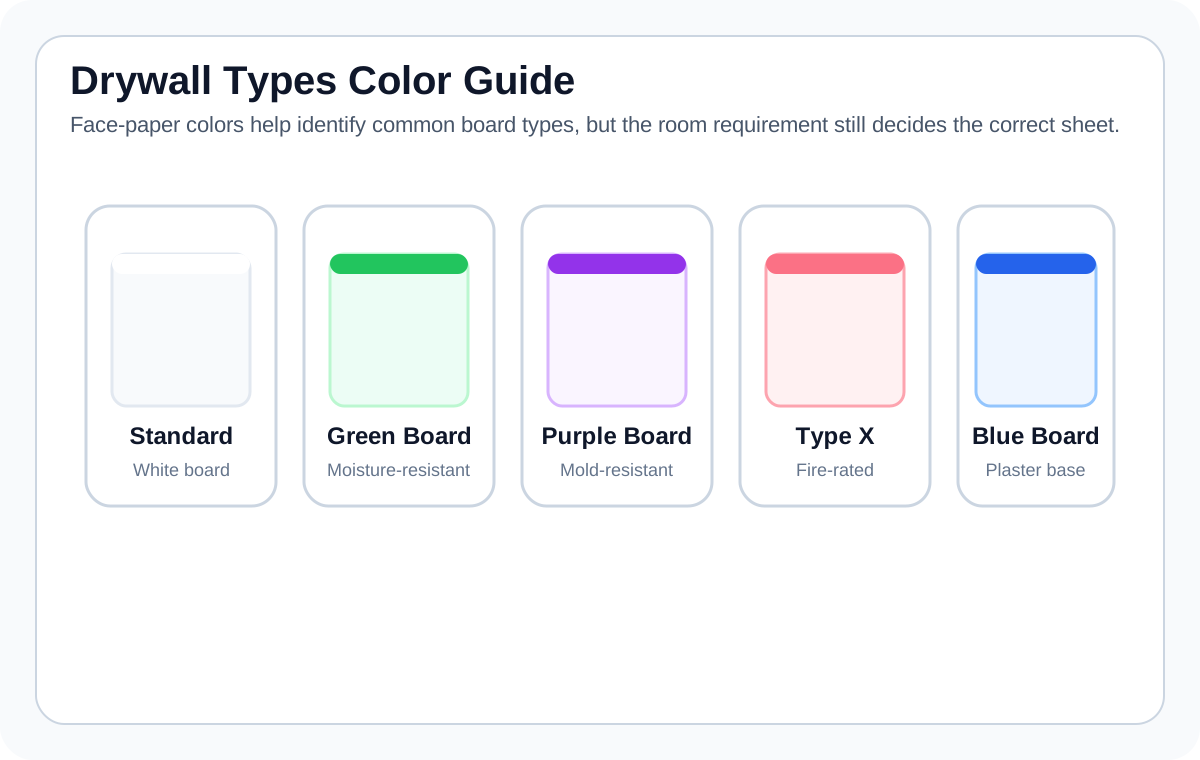
Start with the overview table. This is the fastest way to understand what each drywall type is trying to do before you dig into thickness, fire rating, or room-specific rules. [1]
| Type | Common Name | Color Code | Best Application | Price vs. Standard |
|---|---|---|---|---|
| Standard | White board | White | Interior walls and ceilings | Baseline |
| Lightweight | Lite board | White | Same use as standard, easier handling | About 15% to 20% more |
| Moisture-resistant | Green board | Green | Bathrooms, kitchens, laundry walls | About 25% to 30% more [4] |
| Mold and moisture resistant | Purple board | Purple | High-humidity areas and basements | About 40% to 55% more [4] |
| Fire-rated Type X | Type X | Pink or yellow | Garage walls and fire separations | About 35% to 50% more |
| Fire-rated Type C | Type C | Pink or yellow | Higher-rated fire assemblies | About 50% to 65% more [2] |
| Soundproof | QuietRock | White | Home theaters, bedrooms, offices | About 300% to 500% more |
| Abuse-resistant | AR board | White | High-traffic commercial or rental areas | About 60% to 80% more [1] |
| Exterior sheathing | DensGlass | Glass mat | Exterior wall sheathing | About 80% to 120% more |
| Plaster base | Blue board | Blue | Veneer plaster systems | About 20% to 35% more |
Part 2: Standard Drywall
The Baseline - Regular White Board
Standard drywall is the baseline product most people picture when they think of gypsum board. It uses a gypsum plaster core pressed between two paper facings and remains the default choice for conditioned interior spaces with ordinary humidity levels. [1]
The gypsum core gives drywall much of its fire resistance because gypsum contains chemically bound water. Under heat, that moisture slows the temperature rise in the wall assembly. That does not make standard drywall a substitute for a fire-rated assembly, but it explains why drywall performs better than raw panel products that have no similar mineral core. [1] [2]
Standard Drywall Specifications
| Thickness | Approx. Weight, 4 x 8 | Common Application |
|---|---|---|
| 1/4 in | About 38 lb | Curved walls and overlays |
| 3/8 in | About 48 lb | Repairs and light-duty applications |
| 1/2 in | About 57 lb | Standard interior walls |
| 5/8 in | About 70 lb | Ceilings on wider spacing and added mass |
Where Standard Drywall Belongs
Use standard drywall for
- Living rooms, bedrooms, dining rooms, and conditioned hallways
- Closets and stairwells with normal humidity
- Ceilings on 16 in framing with the correct thickness
- Ceilings on 24 in framing when 5/8 in board is specified [1]
Do not use standard drywall in
- Bathrooms, laundry rooms, or persistent humidity zones
- Garage fire-separation walls that need rated board
- Exterior applications
- Rooms with chronic moisture or known mold risk [4]
Part 3: Lightweight Drywall
Same Performance, Less Weight
Lightweight drywall uses a modified core so the sheet weighs substantially less than standard board while still installing with the same tools, screw pattern, and finishing process. That matters most when one person is moving board, when access is difficult, or when the project includes a lot of overhead work. [1]
The tradeoff is price and, in some products, a slightly softer feel at the face surface. For many residential remodels, that trade is acceptable because handling fatigue causes more problems in the real world than slight surface softness ever will. [1]
Part 4: Moisture-Resistant Drywall (Green Board)
The Bathroom Standard - With Important Limits
Green board gets its name from its colored face paper, but the color is only the identifier. The important part is that the facing resists moisture absorption better than standard drywall. The core, however, is still gypsum. That means green board is moisture-resistant, not waterproof. [4]
What Green Board Is - And Isn't
Where Green Board Belongs
Correct uses for green board
- Bathroom walls outside shower and tub surrounds
- Laundry rooms and utility spaces
- Kitchen walls away from direct sink splash zones
- Basements with moderate humidity but not persistent moisture [1] [4]
Do not use green board in
- Inside shower enclosures
- Behind tub surrounds in direct water contact
- Exterior applications or standing-water risk zones [4]
Typical cost for 1/2 in green board is about $14 to $19 per 4 x 8 sheet, or roughly 25% to 30% above standard. [4]
Part 5: Mold & Moisture-Resistant Drywall (Purple Board)
The Upgrade Over Green Board
Purple board improves on green board by treating both the facing and the core for better resistance to moisture and mold growth. That makes it the stronger choice in bathrooms, basements, laundry rooms, and other spaces where the room condition is more than occasional humidity. [4]
Purple Board vs. Green Board
| Feature | Green Board | Purple Board |
|---|---|---|
| Moisture-resistant facing | Yes | Yes |
| Mold-resistant core | No | Yes |
| Humidity resistance | Moderate | High |
| Direct water contact | No | No |
| Typical premium vs. standard | About 25% to 30% | About 40% to 55% [4] |
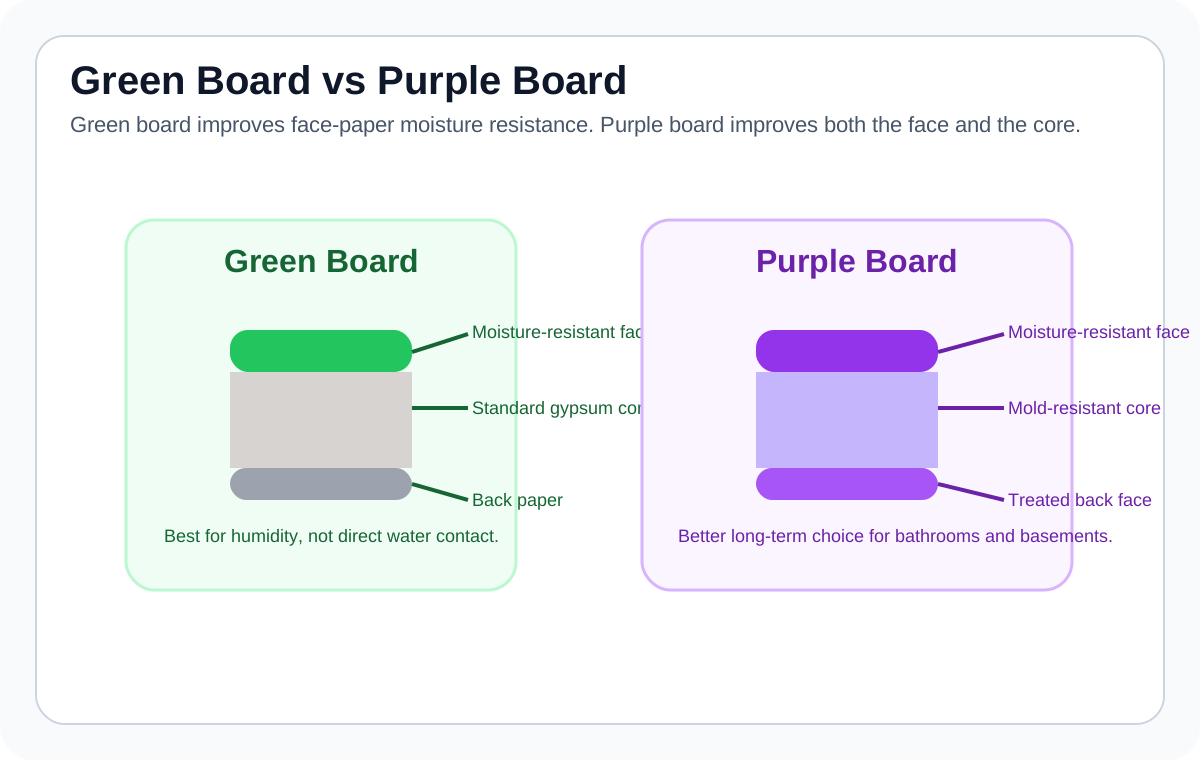
In most bathrooms or below-grade spaces, the cost jump from green board to purple board is relatively small in total-project terms. On many residential jobs, that difference is worth paying because board replacement in a moisture-damaged room is far more expensive than the original upgrade. [4]
Part 6: Fire-Rated Drywall - Type X vs. Type C
The Fire Separation Wall Standard
Fire-rated drywall is not just a premium option. It is often a code requirement, especially on garage separation walls, ceilings below habitable rooms, and certain multi-family assemblies. The two names most people hear are Type X and Type C, and they are not interchangeable. [2]
Type X Drywall
Type X drywall uses a denser gypsum core reinforced with glass fibers. Those fibers help the board stay more intact as it calcines under heat, which is why Type X is associated with 1-hour fire-rated wall and ceiling assemblies when the rest of the system is installed correctly. [2]
Type C Drywall
Type C goes beyond Type X by increasing reinforcing materials and typically adding vermiculite. That mineral expands under heat and helps the assembly keep its integrity longer. The result is better performance in assemblies that require higher ratings, often 2-hour configurations or similar enhanced fire-resistance expectations. [2] [3]
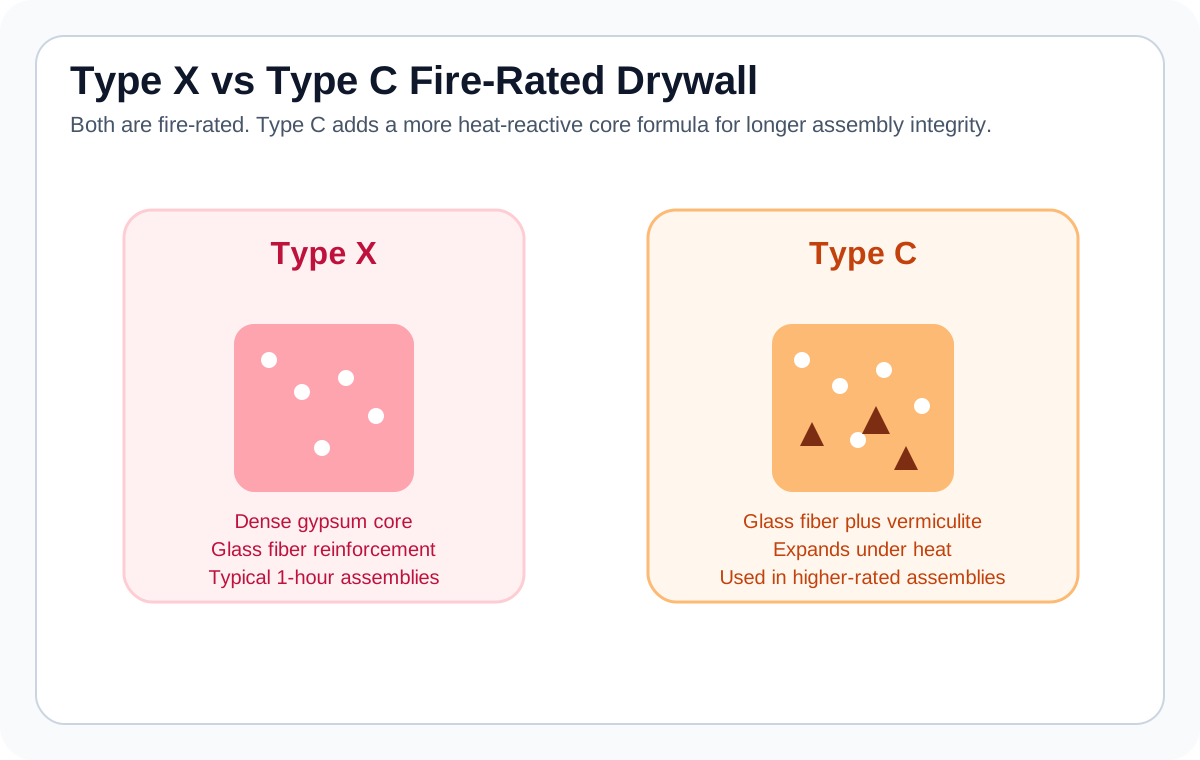
| Feature | Type X | Type C |
|---|---|---|
| Core reinforcement | Glass fibers | More glass fibers plus vermiculite |
| Typical assembly target | 1-hour assemblies | Higher-rated assemblies |
| Common use | Residential garage and separation walls | Commercial and enhanced fire-rated systems |
| Typical cost vs. standard | About 35% to 50% more | About 50% to 65% more [2] [3] |
Where Fire-Rated Drywall Is Required
- Garage walls shared with living space
- Garage ceilings below living space
- Walls between dwelling units
- Some mechanical-room and stairwell assemblies depending on code [2]
Fire-rated drywall only performs as part of a rated assembly. Correct thickness, framing, fastener schedule, and penetration sealing still matter. [2]
Part 7: Soundproof Drywall
Acoustic Performance - At a Price
Standard drywall offers limited sound control on its own. Soundproof drywall uses layered gypsum and damping materials to absorb more vibration within the panel itself, which is why products such as QuietRock are used in home theaters, offices, bedrooms, and multi-family conversions. [1]
| Assembly | Approx. STC Rating | What You Hear |
|---|---|---|
| Standard 1/2 in single layer | 33 to 36 | Normal speech clearly audible [1] |
| Standard double layer | 44 to 46 | Loud speech audible |
| QuietRock 510 single layer | 45 to 52 | Loud speech faint [1] |
| QuietRock 545 single layer | 45 to 56 | Most loud sounds reduced significantly |
The price is the catch. Soundproof drywall can cost three to five times as much as standard board, which is why many projects use a double-layer standard assembly with damping compound instead. If you are pricing those choices, use the Drywall Cost Calculator and then compare the totals with the full Drywall Cost Guide 2026.
Part 8: Abuse-Resistant Drywall
Built for High-Traffic Environments
Abuse-resistant drywall is made for walls that take hits, carts, bags, furniture movement, and more frequent contact than a quiet residential room ever will. These panels typically use denser cores and fiberglass-mat faces to resist dents, punctures, and scuffs better than standard paper-faced board. [1]
| Test | Standard Drywall | Abuse-Resistant |
|---|---|---|
| Surface indentation | Dents easily | Resists harder impacts |
| Puncture resistance | Low | High |
| Scuff resistance | Low | High |
Abuse-resistant board makes the most sense in hallways, schools, hospitals, rental property entry corridors, garages, and any room where surface damage is a recurring maintenance cost. [1]
Part 9: Exterior Drywall (Glass Mat Sheathing)
For Behind-the-Cladding Applications
Exterior gypsum sheathing is a different category from interior drywall. Products such as DensGlass use fiberglass mat facings instead of paper and are meant to sit behind exterior cladding, not as the visible interior wall finish. Their role is to provide a sheathing layer that handles moisture and mold exposure far better than interior gypsum board. [1]
- No paper face to absorb water
- Better mold resistance
- Suitable for exterior wall sheathing systems
- Not intended as an interior finished wall surface [1]
Typical pricing is about $22 to $35 per 4 x 8 sheet, well above standard interior board. [1]
Part 10: Plaster Base (Blue Board)
The Veneer Plaster System Base
Blue board is designed for veneer plaster systems, not for ordinary tape-and-mud finishing. Its face paper is formulated to bond with plaster, which makes it useful in historic renovation, specialty residential work, and projects where the owner wants the durability and feel of a plaster-finished wall without using full traditional multi-coat plaster. [1]
| Feature | Standard Drywall | Blue Board |
|---|---|---|
| Finish method | Joint compound and tape | Veneer plaster |
| Surface hardness | Moderate | Higher |
| Skill required | Moderate | Higher plaster skill |
Part 11: Choosing the Right Drywall - Room by Room
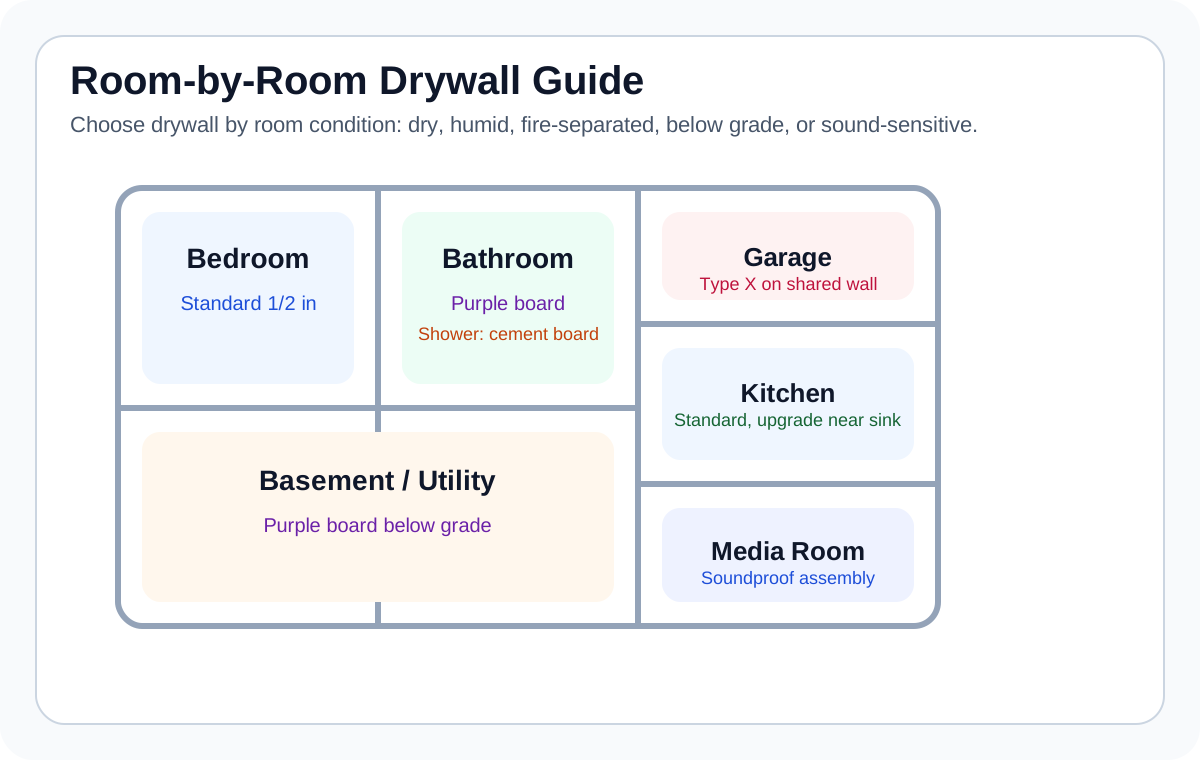
The Complete Application Guide
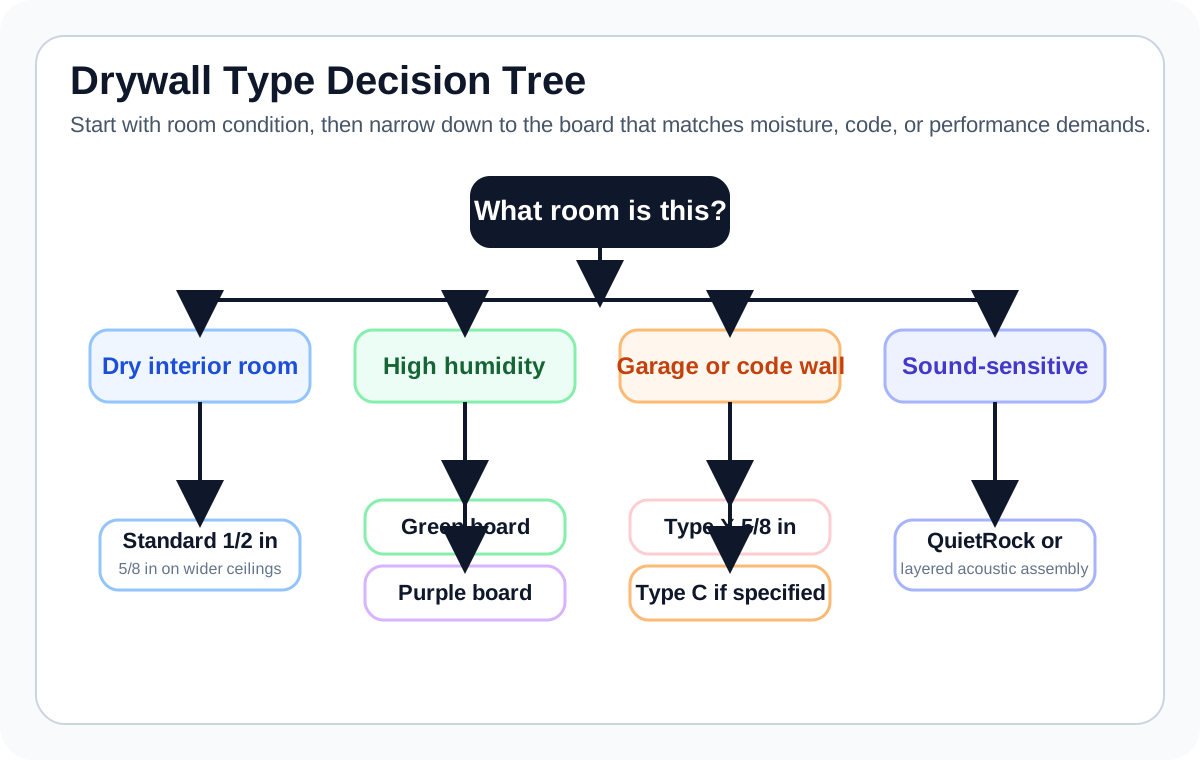
Room-by-room selection is the easiest way to avoid buying the wrong board. Instead of memorizing every product, identify the room condition first: dry, humid, direct-wet, fire-separated, sound- sensitive, or high-traffic. [1] [4]
Part 12: Drywall Type Cost Comparison
Side-by-Side Price Reference - 2026
These are practical per-sheet price references for 2026 retail conditions. Bulk orders usually improve the number, but the chart gives a reliable side-by-side view of what each upgrade costs relative to standard board. [1] [4]
| Type | 1/2 in Sheet Price | 5/8 in Sheet Price | Premium vs. Standard |
|---|---|---|---|
| Standard | $10 - $14 | $13 - $18 | Baseline |
| Lightweight | $13 - $17 | $16 - $21 | About 15% to 20% |
| Green board | $14 - $19 | $17 - $23 | About 25% to 30% [4] |
| Purple board | $16 - $22 | $19 - $26 | About 40% to 55% [4] |
| Type X fire-rated | N/A | $15 - $21 | About 35% to 50% |
| Type C fire-rated | N/A | $18 - $26 | About 50% to 65% [2] |
| Abuse-resistant | $18 - $26 | $22 - $30 | About 60% to 80% [1] |
| Blue board | $13 - $18 | $16 - $22 | About 20% to 35% |
| DensGlass | $22 - $35 | $26 - $40 | About 80% to 120% [1] |
| QuietRock 510 | $40 - $65 | N/A | About 300% to 400% [1] |
| QuietRock 545 | $55 - $80 | N/A | About 400% to 500% [1] |
If you want the installed cost impact, not just the material premium, move from this chart into the Drywall Cost Guide 2026 or run the numbers directly through the Drywall Cost Calculator.
Part 13: The Most Common Drywall Type Mistakes
5 Wrong-Type Decisions That Lead to Wall Failures
Mistake 1: Using standard drywall in bathrooms. Standard board absorbs moisture too easily for bathroom conditions. Minimum upgrade: green board. Better upgrade: purple board. [4]
Mistake 2: Using green board inside a shower. Green board is moisture-resistant, not waterproof. Use cement board or DensShield in direct-wet assemblies. [4]
Mistake 3: Skipping Type X on garage-to-house walls. This is a code and fire-safety problem, not a cosmetic decision. [2]
Mistake 4: Confusing Type X with Type C. If the assembly calls for Type C, swapping in Type X can break the rating. [2] [3]
Mistake 5: Using 1/2 in standard drywall on 24 in ceiling framing. That ceiling is a sag problem waiting to happen. Use 5/8 in where required. [1]
Most wrong-board decisions come from asking “what drywall is cheapest?” before asking “what is this room asking the wall to do?”
Part 14: Quick-Reference Summary
Drywall Type Decision Tree
Now That You Know Your Type - Here's What's Next
Choosing the right drywall type is the first decision. After that, you still need the sheet count, the project budget, and the installation sequence.
| Tool or Guide | What It Does |
|---|---|
| Drywall Calculator | Calculate the exact sheet count for the room once you know the right board type. [1] |
| Drywall Cost Calculator | Estimate total project cost by board type, location, and finish level. [4] |
| Drywall Cost Guide 2026 | See the full pricing breakdown for materials, labor, finish levels, and regional adjustments. [1] |
| How to Hang Drywall | Follow the step-by-step installation sequence if you are planning a DIY job. [2] |
| How Much Drywall Do I Need? | Use the formula, room chart, and waste guidance before ordering board. [1] |
Editorial note: the [1]-[4] markers in this guide refer to the board-type, moisture, fire-rating, and pricing assumptions used across this site's drywall tools and editorial references.